Beacon Hill and Boston Common Park
Beacon Hill is Boston's historic residential neighborhood. This elegant neighborhood is adjacent to the city's downtown on the east, sitting at the back of the important Massachusetts State House. In Beacon Hill, Boston's wealthy and affluent built their homes and the neighborhood is still considered attractive to those with means.
- Beacon Hill boasts elegant and beautiful streets, along with a few points of interest. Its western part stretches Charles Street, bustling with many antique shops
- South of Beacon Hill and the State House lies the city's large park, the lovely Boston Common
- South of the park, the streets of Boston's Chinatown and just slightly west, the vibrant neighborhood of the LGBTQ community
Click here to check availability and prices for hotels in Beacon Hill, Boston…
6 Must-See and Do Things in Beacon Hill and Boston Common
- The prototype of the American Congress – Boston's House of Representatives
- The sharp spire of Park Street Church
- Antiques on Charles Street
- The elegant homes of Louisburg Square and Mount Vernon Street
- Air in Boston Common (and maybe even a swan boat ride on the pond)
- Colorful atmosphere in Boston's Chinatown
Click here for the complete travel guide to Boston…
Click here to purchase the Boston CityPASS online, all attractions in one ticket…
Click here to purchase the Go City Boston: Explorer Pass online…
Map of Everything to See and Do in Beacon Hill District
Beacon Hill
Massachusetts State House
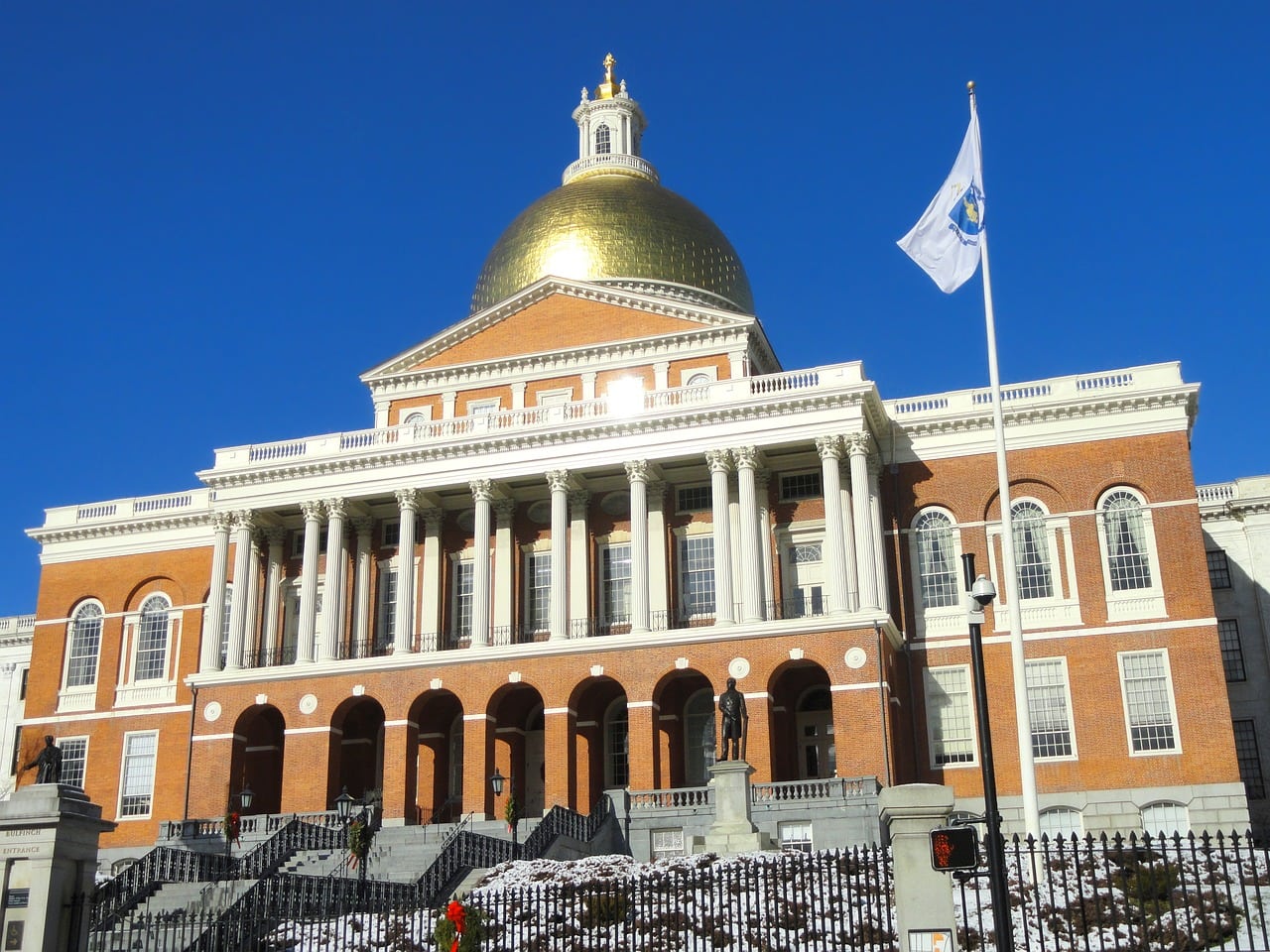
The Massachusetts State House building, essentially the state's parliament, is considered an archetype for such structures. Its facade, facing the Common Park, is built in a neo-classical style with a golden dome above it. The dome is based on the type of elegant domes of the Florentine Renaissance (the Dome of the Duomo in Florence designed by Filippo Brunelleschi). It was coated in gold only about eighty years after its completion. The building was completed in 1798 and served as inspiration for the construction of the Capitol Building in Washington D.C.. Many statehouses across the United States were also built following the model of this State House.
For a guided tour of all Boston's historical sites, click here…
The Massachusetts State House has undergone several expansions and no longer consists only of the elegant facade facing the park. The expansions included the addition of the Legislative building in 1895 and the Grand Hall, which encompasses the entire rear of the building, constructed only in 1990. The assembly of representatives takes place in the original Senate chamber beneath the golden dome.
Click here for a guided tour of Boston + Cambridge…
Nichols House Museum
Just a half-minute's walk from the entrance to the Massachusetts State House, on the elegant Mt. Vernon Street, stands the house of Rose Standish Nichols. This home was built together with the neighborhood houses by architect Charles Bulfinch, who designed the entire elegant street. Nichols bequeathed her home to the city with the intention that it would open as a period museum illustrating the lifestyle of Beacon Hill in the early 20th century. The house showcases Nichols' belongings, elegant period furniture, and all that represents the wealth of urban life in New England.
Address: 55 Mt Vernon St., Boston
Click here for the latest opening hours of the house…
Museum of African American History
The Museum of African American History is located where the African Meeting House was active from the 1830s. This was a small, improvised community church and the first in the USA intended for the city's black residents.
This church is one of the most important sites in the USA related to the African American community's liberation movement. Although more in the context of the 19th century and the Civil War (emancipation from slavery), it had a huge impact on the 1960s as well.
Today, the church building and the adjacent structure are dedicated to a museum that tells the history of the Black community in Boston. Slavery in Massachusetts was prohibited as early as the beginning of the 19th century, and a large Black population lived in Beacon Hill. This population migrated south over the years, but the area remains an important part of its history.
Address: 46 Joy St., Boston
Click here for the museum's current opening hours…
Louisburg Square
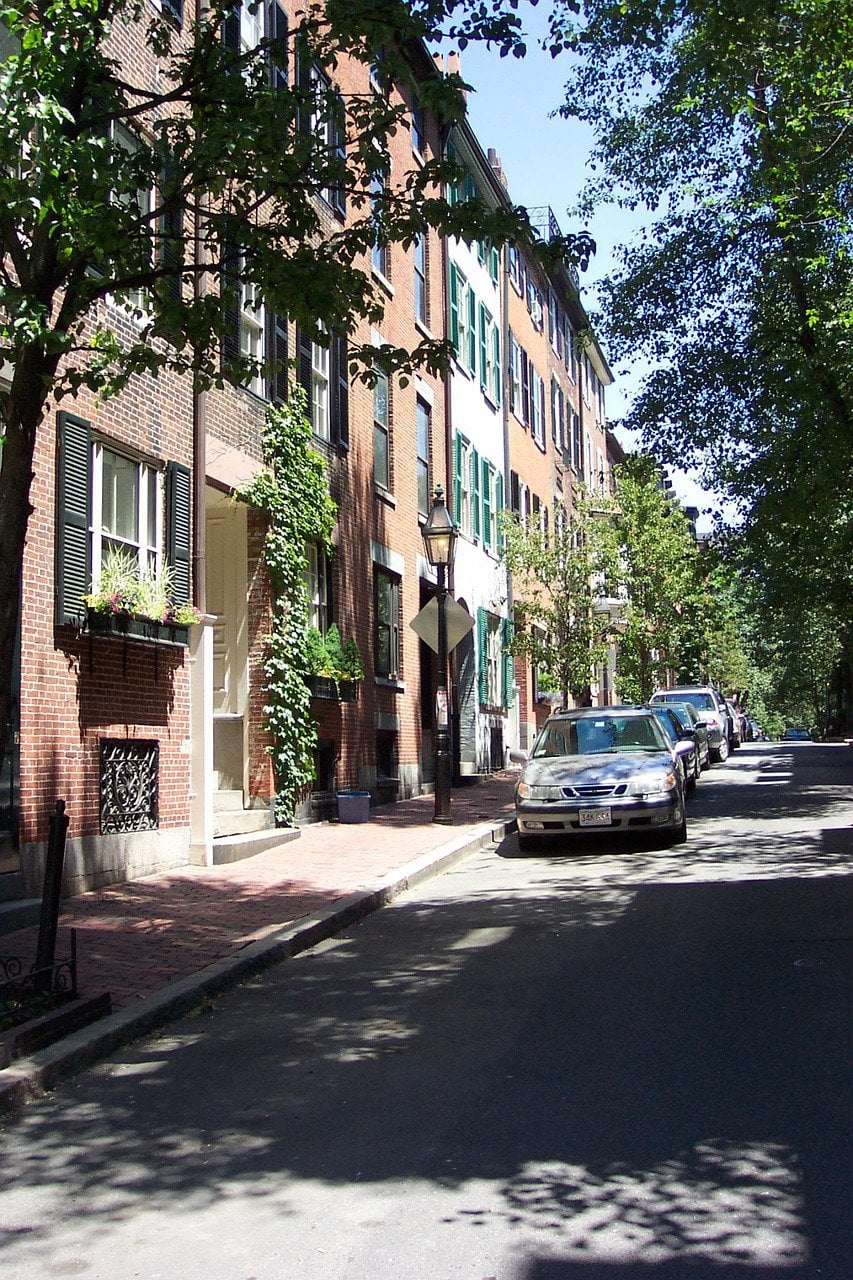
Beacon Hill district, behind the Massachusetts State House, is now one of the most prestigious in the city. The most dazzling location is the elegant Louisburg Square. The square is a green section enclosed by a white iron fence, surrounded by the luxury apartments of some of the city's wealthiest. It was built in the 1830s and is commonly believed to be the birthplace of Christmas caroling in all of America. The square intersects with Mount Vernon Street, which is also lined with beautiful and elegant houses.
Click here for Boston Old Town Trolley + Boston Tea Party Ships tickets…
Charles St
Just a bit west of Louisburg Square, down Mount Vernon Street, you'll find Beacon Hill's main street, the lively Charles Street. This street is named after the great river that runs through Boston, bending north as it heads towards its mouth at Massachusetts Bay. The historical center of the city is built on this bend. In the past, the street was a promenade along the riverbank, but after land reclamation, the street is now several dozen meters away from the bank.
Charles Street is one of the historic streets that truly embody the local architectural style. Many of the houses were built in the early 19th century, and it is also considered a prestigious residential area. The street’s buildings mix residential and commercial spaces, with apartments on the first floor and above being among the city's most luxurious. The ground floor houses a multitude of restaurants, shops, and a significant concentration of antique stores. The street is known as one of the major antique centers in New England.
The Area Around Boston Common Park
Park Street Church and Granary Burying Ground
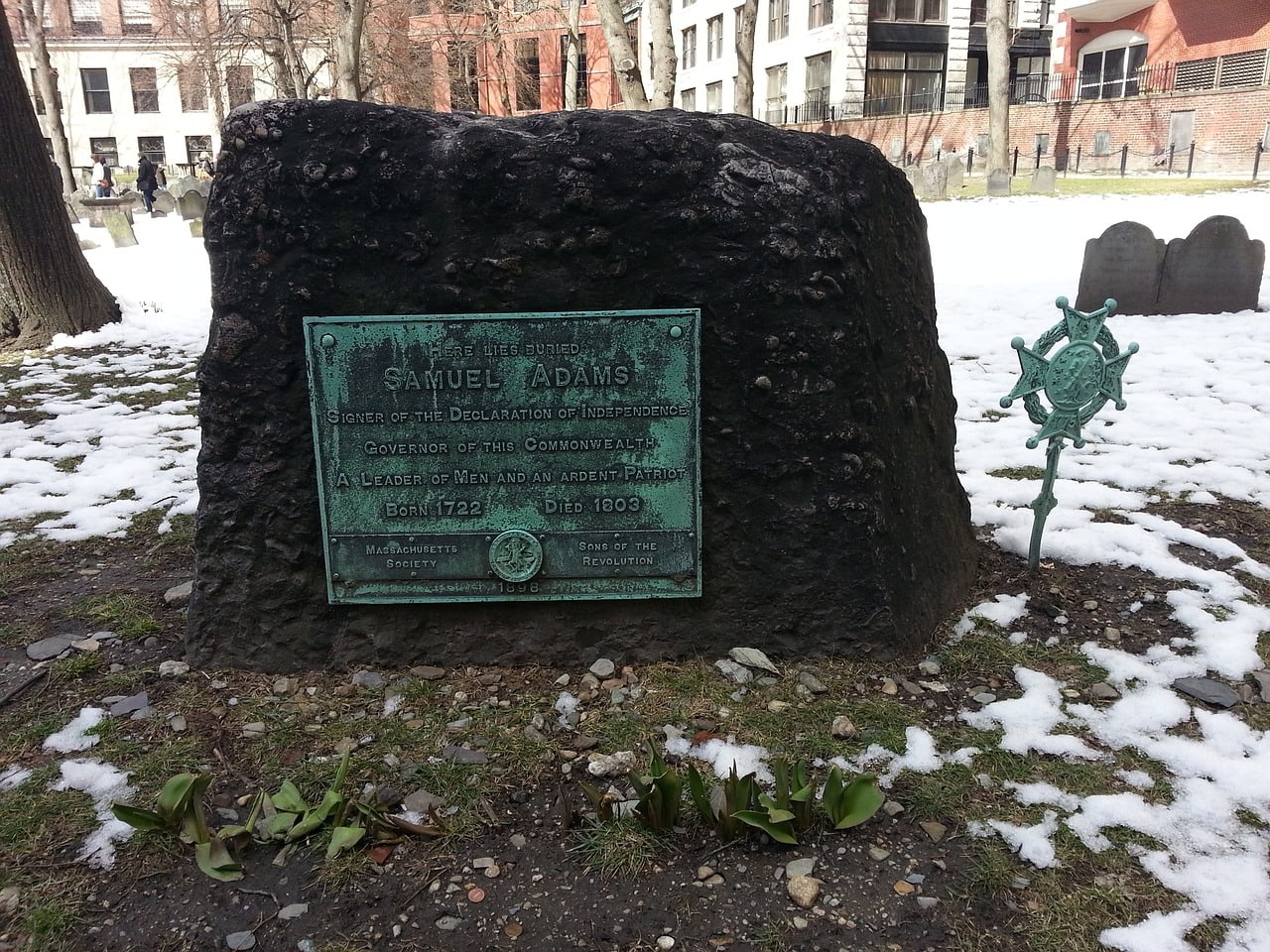
The beautiful church is located across from the entrance gates to the large park in the heart of historic Boston. Park Street Church was built in the early 19th century and is famous for its sharp bell tower, which rises to a height of 65 meters. At the back of the church lies the Granary Burying Ground, which has served the city's deceased since the mid-17th century. This cemetery is almost like Boston's pantheon and is the resting place of John Hancock (the man and the signature on the Declaration of Independence), Paul Revere, Samuel Adams, and more.
Boston Athenaeum
In the northern part of the Granary Burying Ground lies the Boston Athenaeum. This is a historic private library located in a distinctive building on Beacon Hill Street. It was inspired by the works of the legendary North Italian architect Andrea Palladio. Today's Athenaeum houses a vast collection of archives, ancient books, manuscripts, and more, including the private library of George Washington. The building also hosted an impressive art collection that is now displayed at the Museum of Fine Arts in Fenway-Kenmore.
Address: Beacon St. 10, Boston
Click here for the latest visiting hours of the library…
Boston Common Park
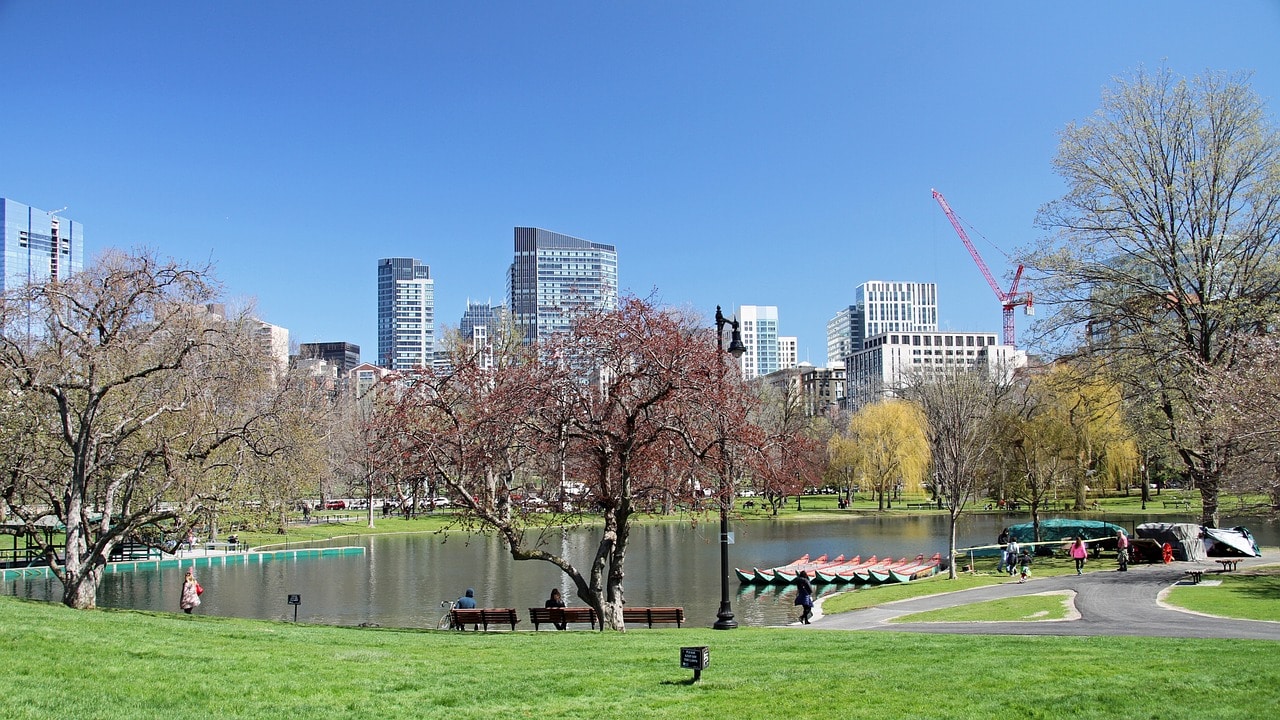
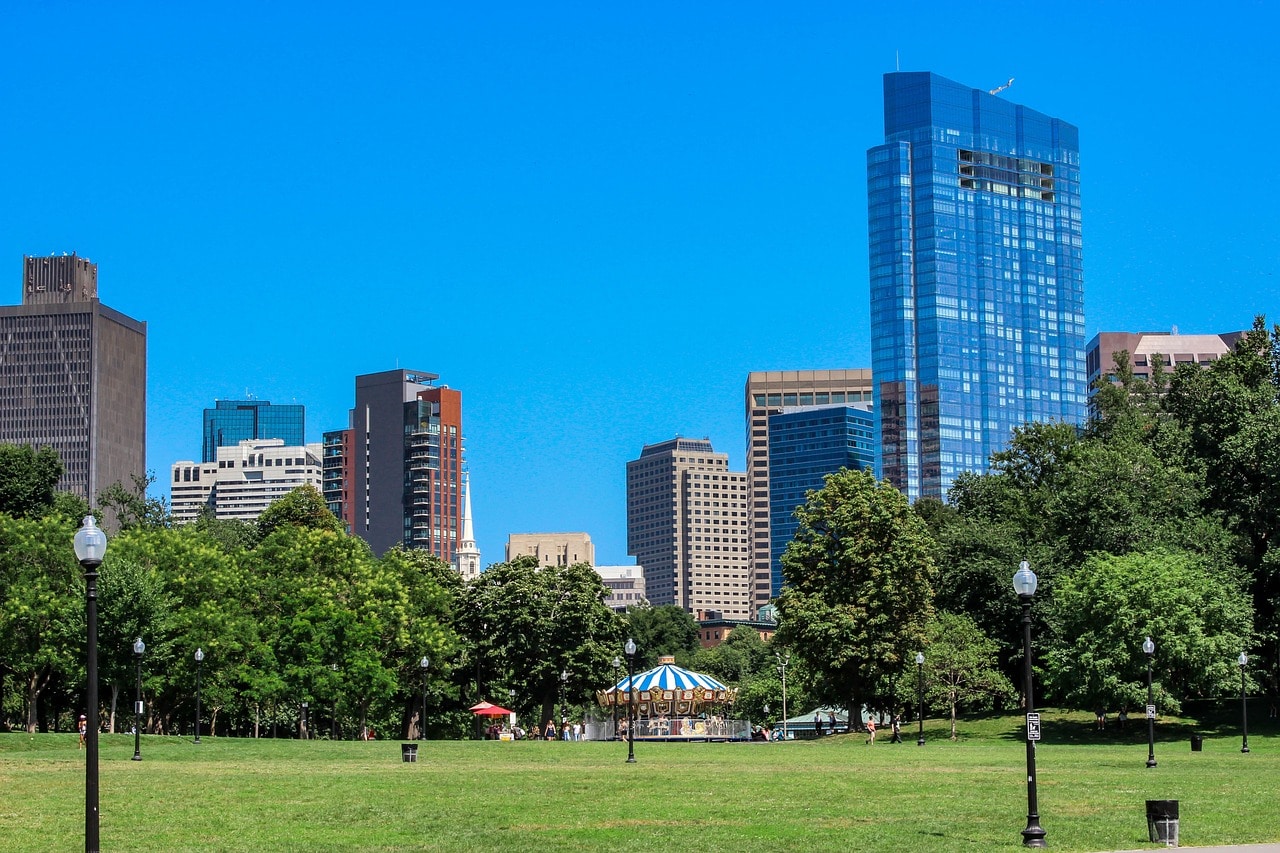
The great park of historic Boston is a wonderful place for a stroll and some fresh air. It was built in 1870 as the city expanded eastward. The city wanted to preserve a green area near its center, and the park, originally grazing fields, was preserved from urban development. The park is designed in the style of elegant English gardens. The southern part of Charles Street runs through it from north to south, and west of the street, part of the river was dried to make room for the park. In this section, you'll find the large lake.
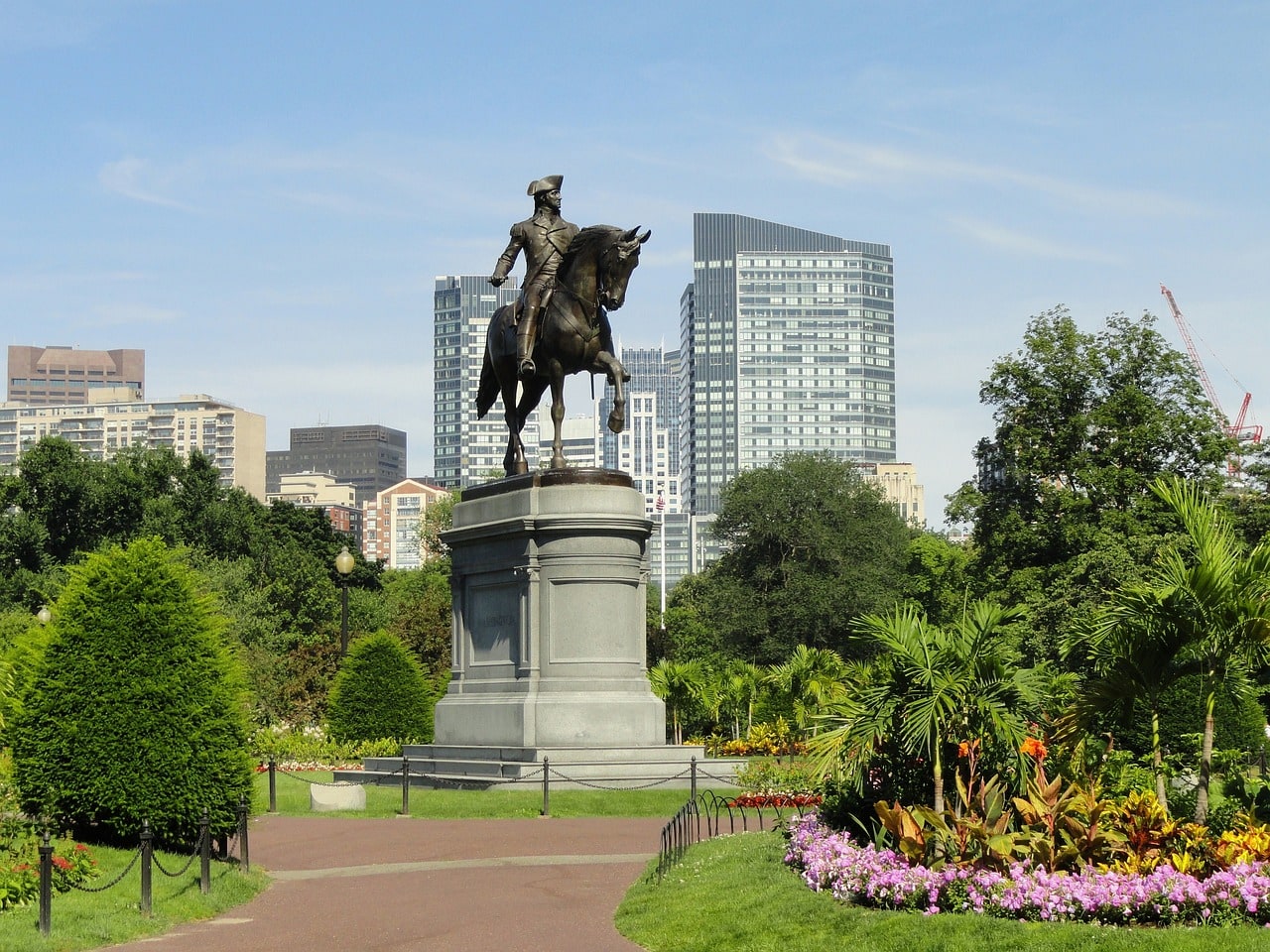
In the heart of the lake is a small island—Duck Island, which you can reach by taking the park's famous Swan Boats, rented at a nearby dock. Next to the small lake stands the impressive statue of George Washington on his horse.
In the eastern part of the park is the Frog Pond, which in winter becomes a popular ice skating rink. Throughout the park, there are numerous statues, monuments, gazebos, and beautiful landscape design. In the southern part, there is also a cemetery. At the east entrance of the park is Brewer Fountain, which was placed there in the early 1870s.
Chinatown of Boston and Bay Village
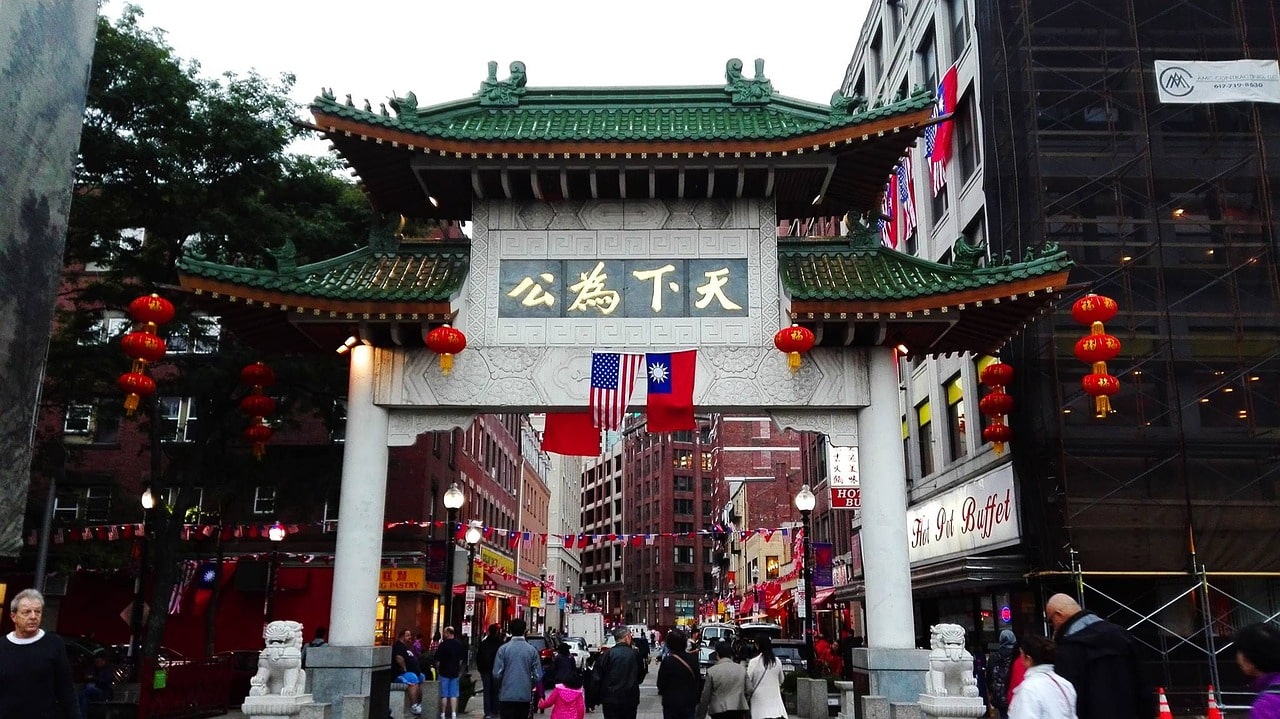
Boston's Chinatown is the third largest Chinese immigrant neighborhood in the USA, following San Francisco's and the Lower Manhattan neighborhood in New York. Today's Chinatown overlaps with Boston's theater district. In Chinatown, several significant theaters operate such as the Wang Theatre and opposite it, the Shubert Theatre. At the heart of the neighborhood lies the large Tufts Medical Center, and to its north are the charming, narrow streets of the neighborhood accessible through the Chinatown Gate from Boston's South Station. On Beach St. and its intersecting streets, you'll find a multitude of excellent Chinese restaurants, unique shops, and markets.
West of Chinatown, in the southern part of Boston Common, you'll find the charming Bay Village. This neighborhood is like a less upscale version of Beacon Hill but with its own vibrant character. Bay Village is currently the heart of Boston's gay community.