Jacksonville – The Deep South in North Florida
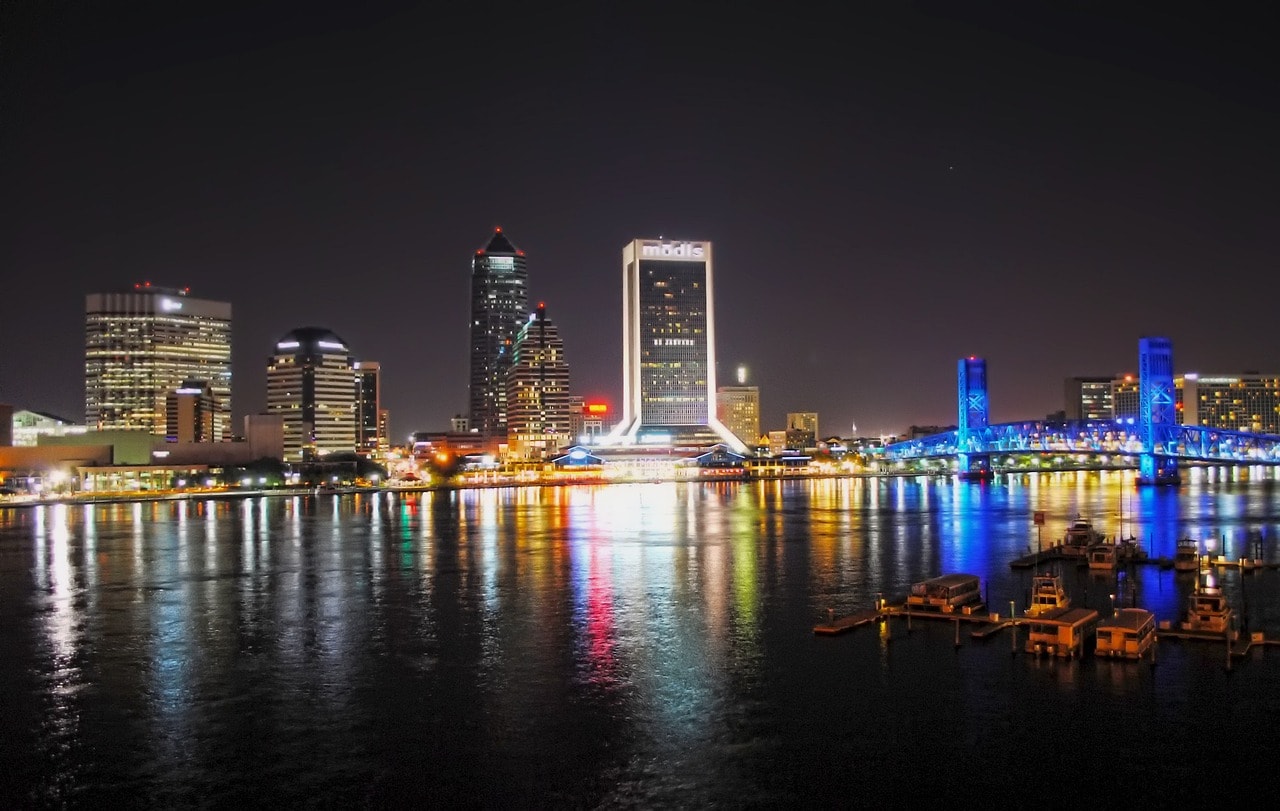
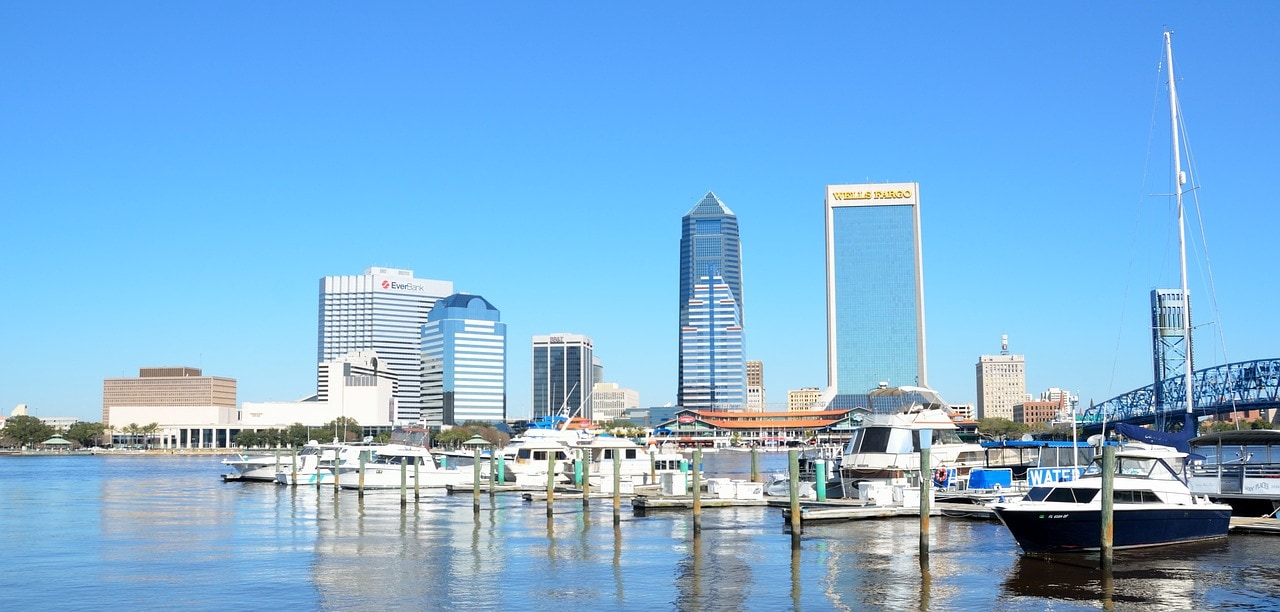
The city of Jacksonville is the metropolis of North Florida. Like most of Florida, it's a relatively new city without much history, except for the French core at Fort Caroline, a French settlement from 1564. Downtown features tall skyscrapers and some good museums in their shadow. In the vicinity towards historic St. Augustine, there's the center of professional golf and its hall of fame. Nearby, you'll find more impressive natural sites and attractions tied with the Deep South of America.

How many days do you need for a trip to Jacksonville?
For a trip to Jacksonville and its surroundings, it's worth dedicating between half a day to a full day.
What are the must-see and do activities in Jacksonville?
- Visit the museums in downtown Jacksonville
- A fun day with the kids at the Jacksonville Zoo and Gardens
- History in the natural surroundings of Fort Caroline
- Learn all about golf and the PGA Tour at the World Golf Hall of Fame
- Stunning natural beaches at Big Talbot Island National Park
- Civil War battle reenactments at Fort Clinch near Fernandina Beach
Click here to check availability and prices at Jacksonville hotels…
What is Jacksonville?
- The city of Jacksonville is technically the largest city in the state of Florida, with a population of about one million residents and around one and a half million in its metropolitan area. For comparison, about half a million people live in Miami, but its metropolitan area has over six million!
- The city is situated on the vast estuary of the St. Johns River. While it is the longest river in Florida, it is more of a very wide body of water that slowly flows into the Atlantic Ocean.
- Jacksonville is a classic southern city, reminiscent of Georgia cities, its neighboring state only 40 km to the north. It significantly differs from Miami, a city built on the sun migration of New York metropolitan residents.
- The settlement origins in the area were actually French, as they established Fort Caroline in 1564 at a strategic location at the river's estuary. The French hold on Fort Caroline was short-lived, as a year later, the Spanish army from St. Augustine conquered the fort and the area changed hands.
Click here for a guided tour in Jacksonville…
Only with Florida's joining the United States in 1821, a decision was made to develop the fort and build a city to the west. The planned city was named after Andrew Jackson, the man behind the Adams–Onís Treaty, which arranged the Spanish withdrawal from the state (and laid the groundwork for Mexico's claim to California, Texas, and more). Later, Jackson would become the seventh president of the USA.
In 1901, the city suffered a massive fire that consumed most of its buildings. Afterwards, the city was slowly rebuilt, mainly with new and dense development in its center. In recent years, the city was significantly hit twice by hurricanes, both Matthew in April 2016 and a year later by Irma, which caused a significant rise in river levels and massive flooding.
Click here to book tickets for a Jacksonville Jaguars football game…
Map of Jacksonville
How to get to Jacksonville?
How to fly to Jacksonville?
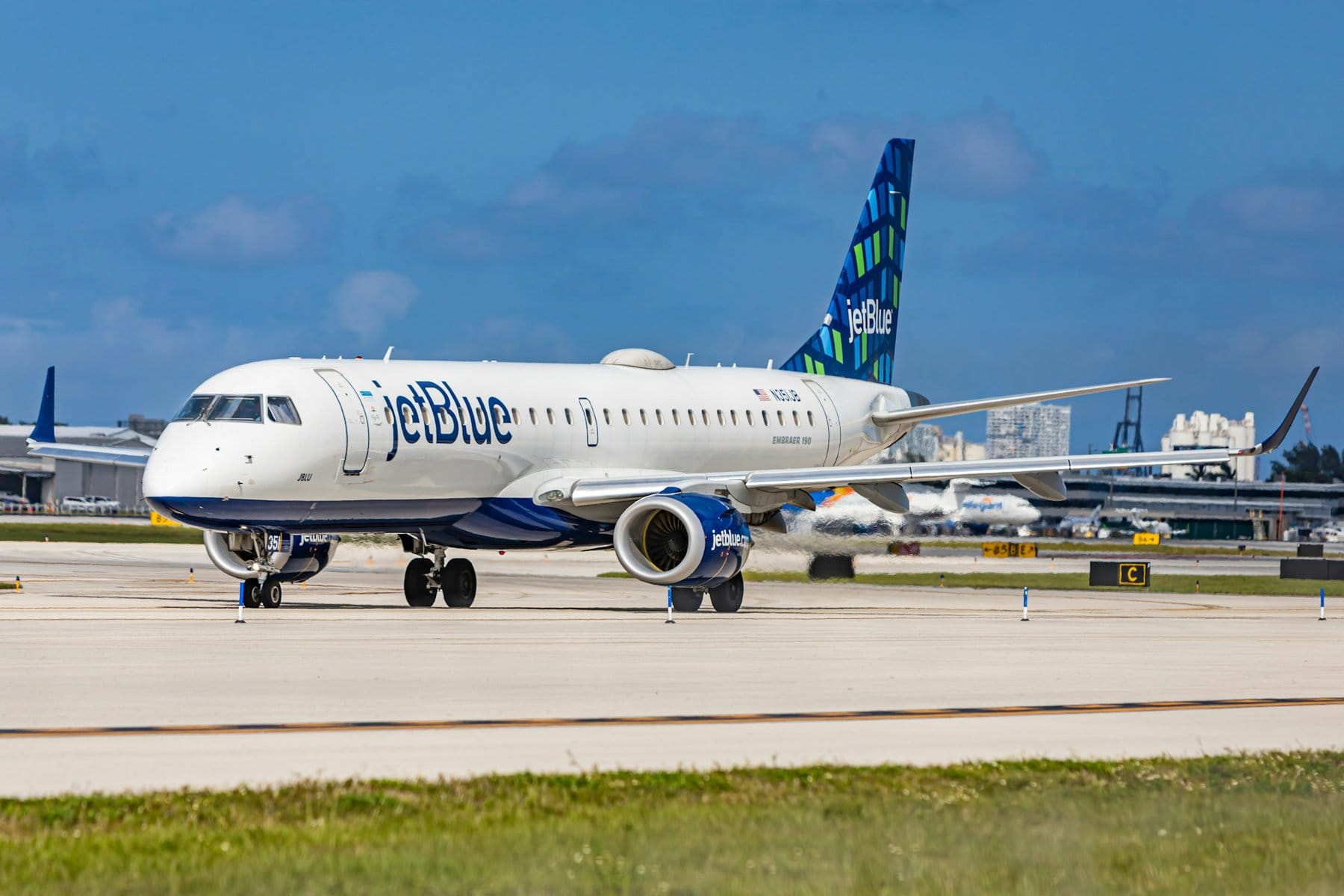
Jacksonville International Airport – Jacksonville International Airport is located north of the downtown area in the large city of North Florida, just a twenty-minute drive away. The airport is accessible from nearly every corner of the USA, well-connected to all major ports on the Atlantic coast, the Midwest, and even Los Angeles and Las Vegas on the Pacific coast. There are also very convenient flights from Miami and Fort Lauderdale for those who prefer not to travel too far from southern Florida.
Click here for a transfer from Jacksonville Airport to Carnival Cruise Port…
Click here to search for attractively priced flight tickets to Jacksonville…
How to get to Jacksonville by car?
- Jacksonville is the crossroads of the two endpoints of the Interstate Highway System
- The I-95 runs through the city, heading north from Miami
- The city is also the eastern terminus of Interstate I-10, the highway connecting the Florida panhandle with New Orleans, Texas cities, and ending in Los Angeles in the west.
- The city nearest to Jacksonville is Orlando, just a two-hour drive away.
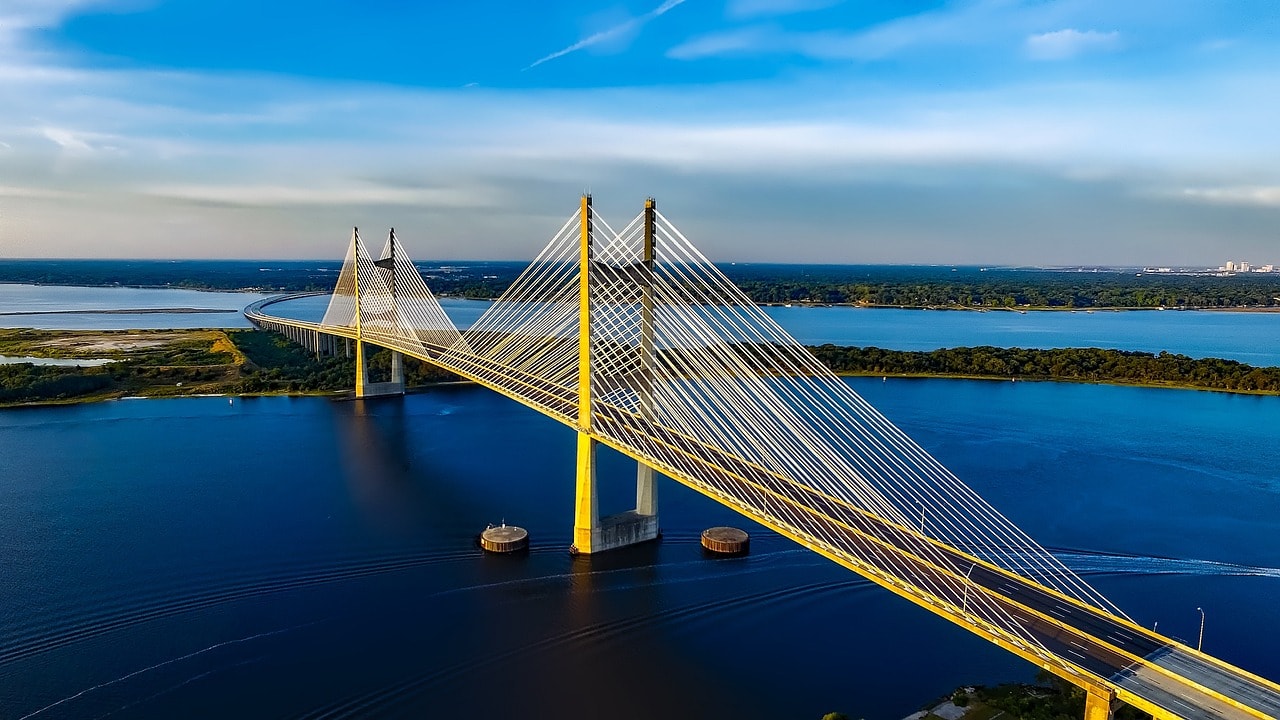
- The Dames Point Bridge, a suspension bridge, is located east of downtown on the I-295 route. The bridge crosses the St. John's River northwards and is considered one of the most beautiful in Florida.
Click here for the complete guide to car rental in the USA + helpful tips and significant discounts…
How to Plan a Trip to Jacksonville?
- The city of Jacksonville is not a popular tourist destination and is mostly used as a stopover during a trip in North and Central Florida. You can include Jacksonville in a route featuring Orlando and Disney World, Cape Canaveral, Daytona Beach, and St. Augustine.
- St. Augustine is one of the most visited cities in Florida and is located a forty-minute drive from the center of Jacksonville.
- Exploring the city itself focuses on the downtown area, home to the city's three interesting museums.
- Outside the center, it’s worth visiting the Golf Hall of Fame, Fort Caroline, the beach towns, and Jacksonville Beach.
- Around the city are several historical southern sites and the Big Talbot Island National Park
- It's also worth visiting Fernandina Beach and Fort Clinch, which is right on the border with neighboring Georgia
Click here to find accommodation in Jacksonville hotels…
All attractions in Jacksonville
MOSH – Museum of Science and History of Jacksonville
MOSH is the city’s museum of history and science. The museum is located near the Southbank Riverwalk, offering a lovely view of the downtown on the opposite bank. The popular museum was founded in 1941 and moved to its current location in 1994.
The museum features rotating exhibits with a large science wing and a significant section on the history of the city and North Florida. The museum's planetarium, named after Bryan Gooding Bryan-Gooding Planetarium, is also very popular and underwent a major renovation in 2010.
Address: Museum Cir. 1025, Jacksonville
Click here for the current operating hours of the museum…
MOCA – Museum of Contemporary Art in Jacksonville
MOCA, the Museum of Contemporary Art in Jacksonville, is located downtown on the north bank of the St. John’s River. This cultural center of the University of North Florida primarily features rotating exhibits of local and international artists. It opened in 2003 with the aim of drawing tourists to the somewhat dull downtown of the city. You can pair a visit with a short stroll along Main Street and the financial district.
Address: N Laura St. 333, Jacksonville
Click here for the current operating hours of the museum…
Cummer Museum of Art & Gardens
The Cummer Museum and Gardens were opened in memory of Nina Cummer, a descendant of a wealthy lumber merchant family and a collector of art and archaeology items. The museum exhibits the rich collection owned by Cummer, including 5000 art pieces. Cummer's private collection includes works by great American artists such as Winslow Homer, Thomas Moran, and Norman Rockwell. The collection also includes some European paintings by artists like Peter Paul Rubens. Apart from art, the museum displays Japanese art items, porcelain creations, and other stunning designs.
The museum's gardens are stunning in their own right. They sit at the back of the museum, bordering the banks of the St. John River. The gardens feature sculptures from Cummer's collection, as well as sections of an English garden and an Italian garden. The gardens are not large but are very meticulously and precisely landscaped.
Address: Riverside Ave. 829, Jacksonville
Click here for the museum's current hours of operation…
Jacksonville Zoo and Gardens
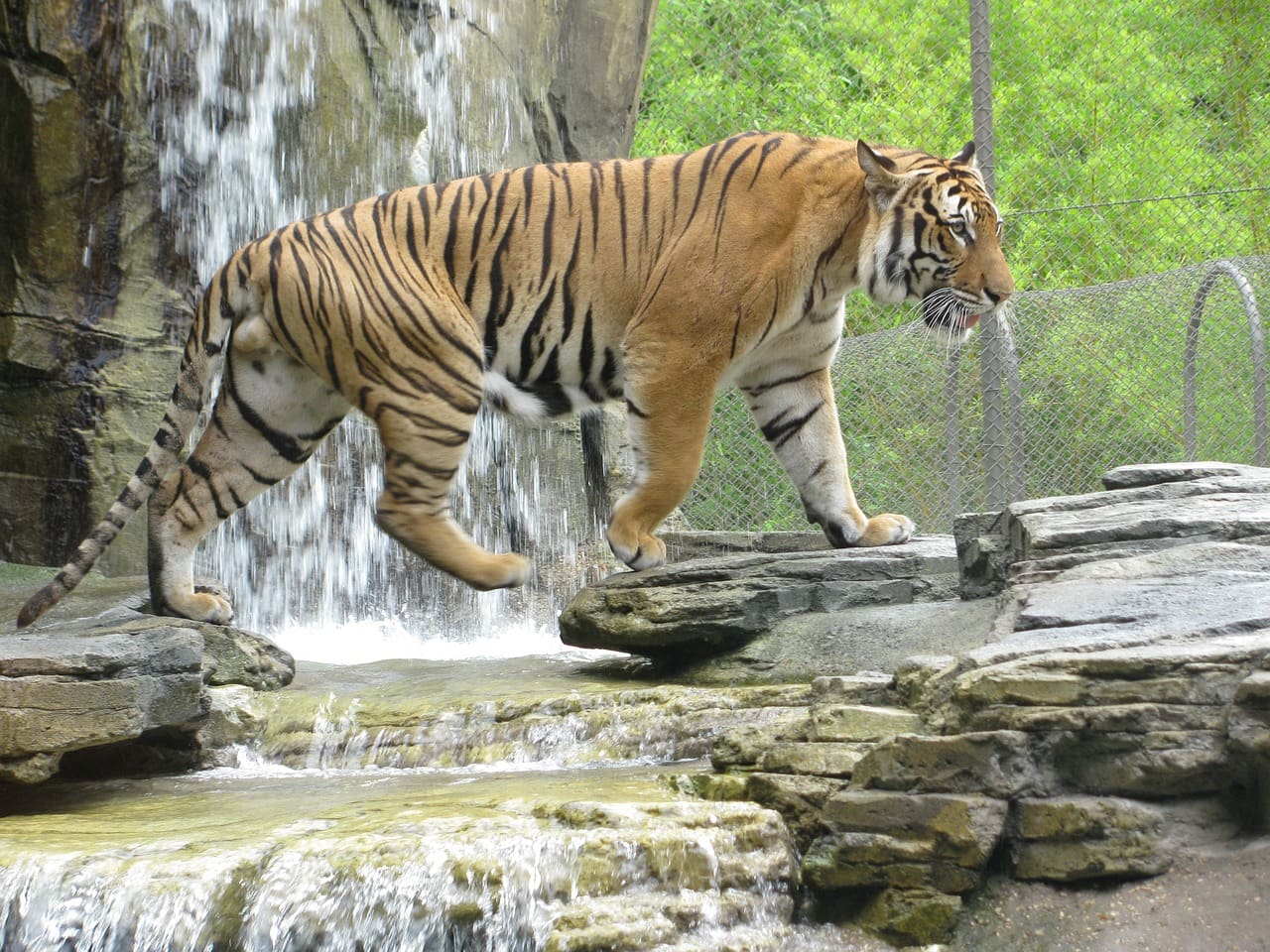
The Jacksonville Zoo and Gardens are located north of downtown at the confluence of the Trout River and the St. John River. The zoo actually combines a zoological habitat with a very impressive botanical collection.
The zoo features more than 2,000 different animal species and more than 1,000 botanical plant and tree species. It's not a large zoo but is very interesting and a favorite among children. It opened in 1914, and one of its attractions is a small railroad track with a train that takes kids along its length.
Address: 370 Zoo Pkwy, Jacksonville
Click here for the current opening hours of the zoo…
Fort Caroline
Fort Caroline was the first settlement site of the city of Jacksonville, nearly 300 years before the city was officially established slightly west of there. It was a French fort founded in 1564 and was captured a year later by the Spanish army that came from St. Augustine. The fort was part of the Spanish control system in North Florida and was called San Mateo until it was abandoned in 1569.
Almost nothing remains of the fort except the land contours. In 1953, the city decided to annex the site to the National Park Service, and it was opened as a park. You can enjoy walks in the lovely forests and visit the fort itself located by the riverbank.
Jacksonville Beach
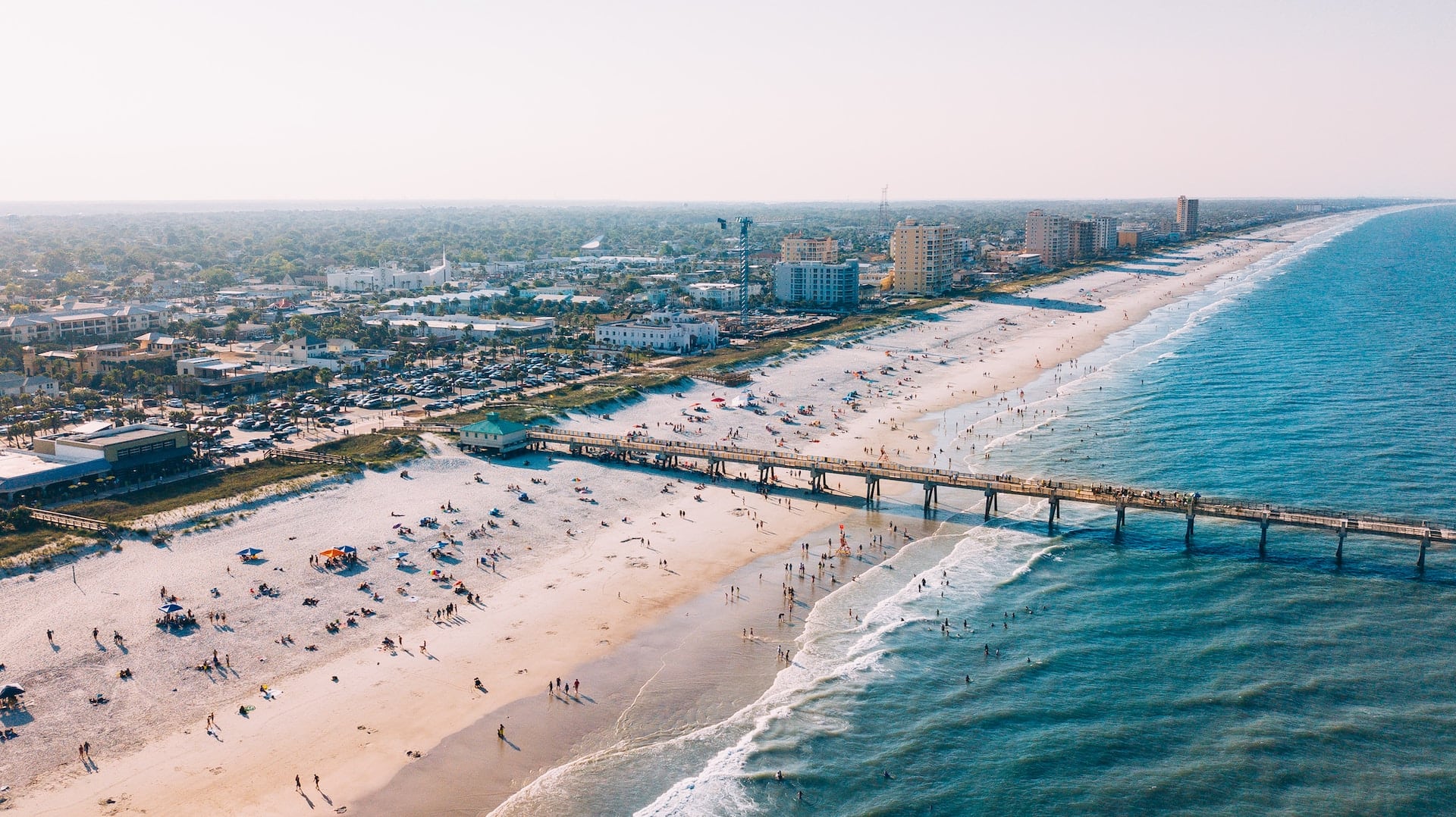
Jacksonville's coastline is a lovely spot for strolling and beachside walks. While there are quite a few beach hotels, it's not the top pick for a sunbathing vacation. It's better to stay in Daytona Beach or the beach towns south of the big city. The main attraction is the Jacksonville Beach Pier, a long pier stretching deep into the ocean. The heart of what’s known as Jacksonville beaches is Atlantic Avenue, lined with plenty of restaurants and entertainment spots.
Around Jacksonville
World Golf Hall of Fame
The entire area between Jacksonville and St. Augustine is known in the USA as the hub of professional golf. The headquarters of the PGA Tour is located in the coastal town of Ponte Vedra Beach, along the outer rim of the Jacksonville metropolitan area. Behind the town, there is a large number of professional golf courses, where all the greats of the aristocratic Scottish sport play, led by Tiger Woods, one of the most well-known Floridians (originally from California), who resides and conducts his various infamous antics in Florida.
The World Golf Hall of Fame is located halfway between Jacksonville and St. Augustine, just off I-95. The Hall and museum are the place to learn everything about professional sports and the heroes of the Scottish-originating sport. It is the only professional sports hall of fame in the USA dedicated to both men and women.
Address: 1 World Golf Pl., St. Augustine
Big Talbot Island State Park
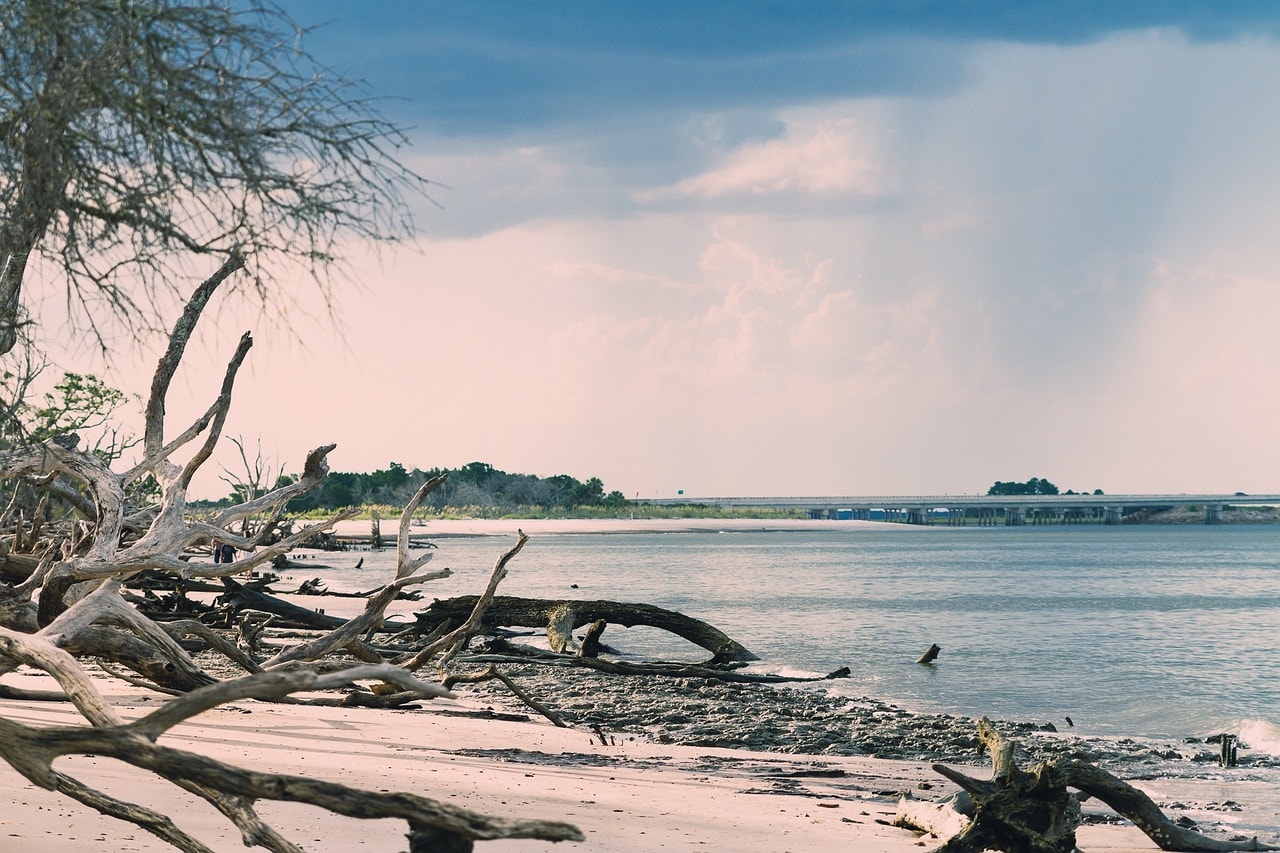
The big park is located a half-hour drive northeast of downtown Jacksonville. It's a slightly different natural area than the large parks in Central Florida, offering a wild and charming landscape with its Atlantic coastline, forests, and expansive nature teeming with wildlife. The entire area is completely untouched, and the preservation of its nature is very strict. The park is particularly popular in the fall when there's a chance to spot whales approaching the shoreline.
Fernandina Beach
The lovely town of Fernandina Beach is a 45-minute drive north of downtown Jacksonville. It's located in the northern part of Amelia Island, right on the border of Florida and Georgia. The town was established by the Spaniards in 1811 and is considered the last town they founded in all of America.
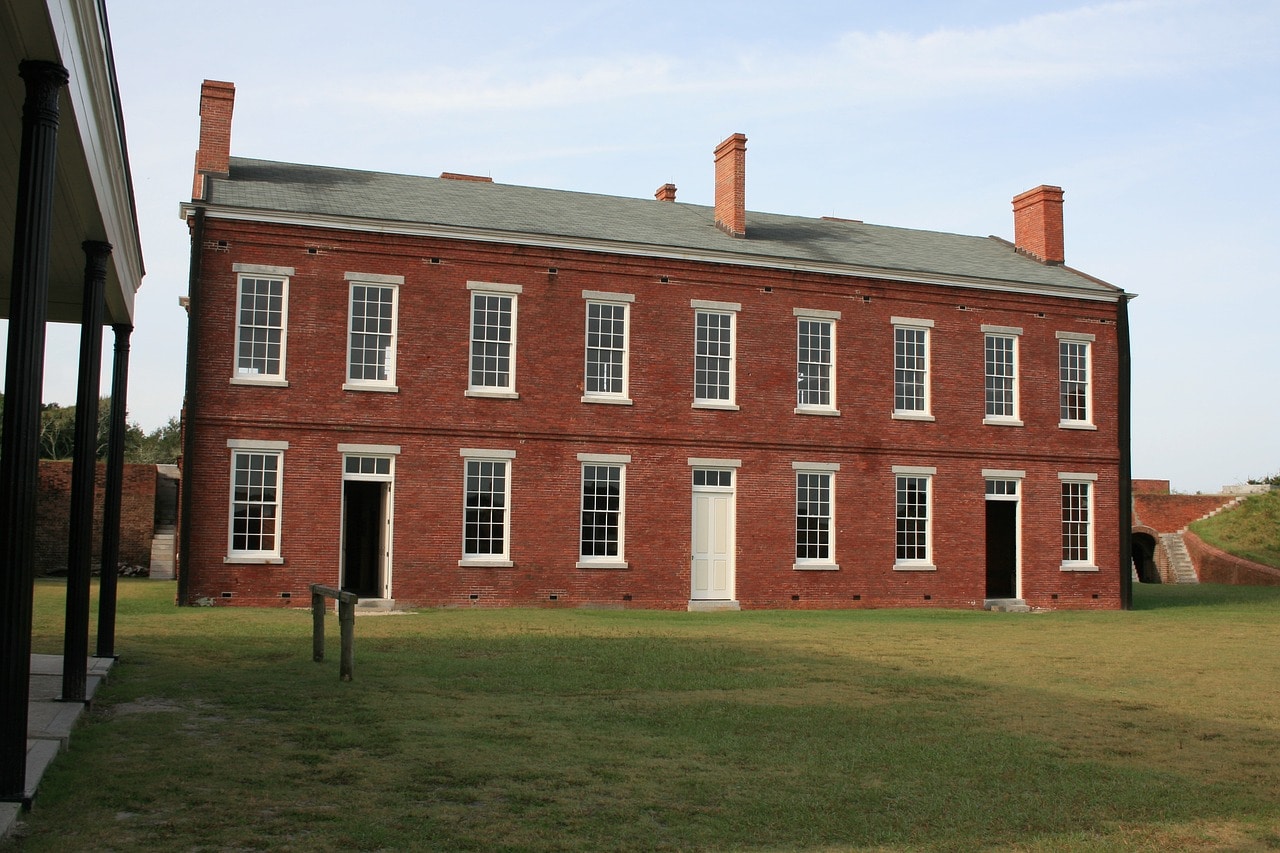
North of the town lies the historic site of Fort Clinch. It's a massive fort that the Spanish built in 1736, and in 1861, it was the scene of a famous battle during the American Civil War. Today, you can visit the well-preserved fort, where reenactments of battles with actors are also held.
Sports in Jacksonville
The Jacksonville Jaguars
The Jacksonville Jaguars are a fantastic opportunity to catch some American football if you're already in town. The team was founded in 1995 and joined the NFL along with the Carolina Panthers from Charlotte (note the creative theme). The Jaguars are a pretty decent team that often makes it to the playoffs, though they've never reached the Super Bowl.
The team plays at the EverBank Stadium, which can hold 82,000 spectators. It’s usually tough to get tickets for football games, but that's not the case in Jacksonville. Partly because the team has not been performing too well in recent years, and partly due to the large stadium. The stadium is located a bit east of downtown Jacksonville, near Highway 1.
Home stadium address: 1 TIAA Bank Field Dr., Jacksonville
Click here to book tickets for the Jaguars' games…