Chicago – The Magnificent Mile
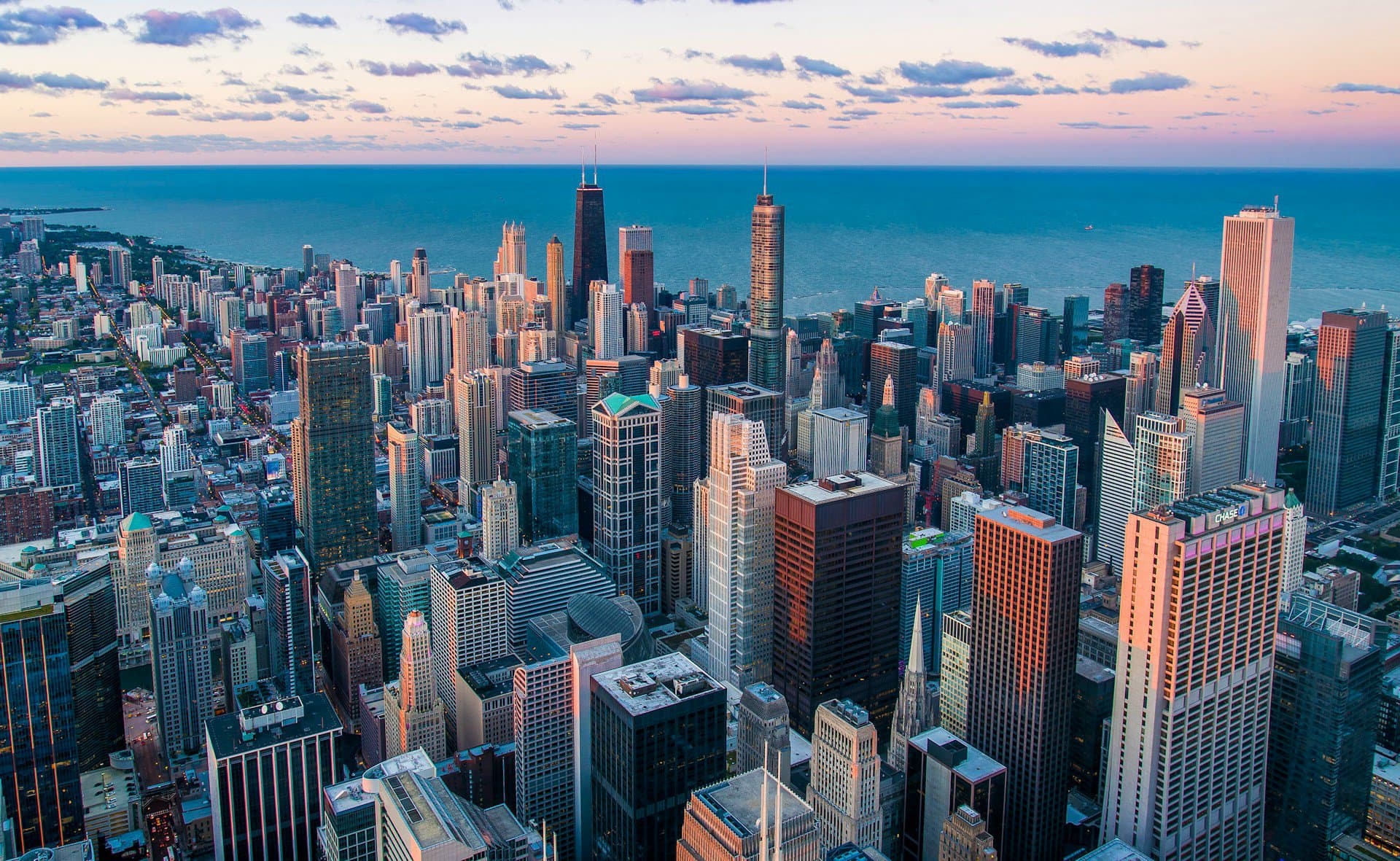
The Magnificent Mile is the most vibrant and attractive part of Chicago. Along Michigan Avenue, there's an incredible array of everything luxurious and stunning in Chicago. Towering above the avenue is the all-black John Hancock Center and below it, the historic Water Tower and Pumping Station, the only magnificent neo-Gothic structure on the avenue that survived the Great Fire of 1871. In the southern part of the Magnificent Mile, there's a row of vintage skyscrapers headed by the Tribune Tower, the Intercontinental Hotel Tower, and the stunning Wrigley Building.

How much time do you need for a tour of Chicago's Near North Side?
A tour of the Magnificent Mile and nearby sites like the Navy Pier requires more than half a day. It's a popular accommodation area, with Chicago's most luxurious urban hotels.
Click here to check availability and prices at the Magnificent Mile hotels in Chicago…
10 Must-See and Do Things on the Magnificent Mile
- Enjoy time with the kids at the mall, museum, and restaurants at Navy Pier + an amazing city view
- Explore the Magnificent Mile from DuSable Bridge to the luxurious E Oak Street
- Delight in the historic symbol of Chicago – the Water Tower
- Experience the modern symbol of the Magnificent Mile – the John Hancock Center and the 94th-floor observatory
- The magnificent clock tower of The Wrigley Building
- The striking gothic top of the Tribune Tower
- The stunning gothic facade of the Fourth Presbyterian Church
- Quality art at The Richard H. Driehaus Museum
- Stroll through the gallery district in River North
- Chill out in style at Oak Street Beach on Lake Michigan
Click here for the complete guide to visiting and touring Chicago…
To purchase the Chicago Skyline Pass, all of Chicago's tower observation decks with one ticket…
What is the Magnificent Mile of Chicago?
- The Magnificent Mile is the prestigious part of Chicago. It's located in the southern part of the Near North Side neighborhood, with Michigan Avenue as the area's main axis.
- The nickname for the avenue between the Chicago River and DuSable Bridge to the south and Oak Street to the north is the Magnificent Mile.
- Along the avenue, there's a huge array of historic skyscrapers, modern skyscrapers, stunning neo-Gothic churches, the charming Water Tower, and towering atop it all is the massive John Hancock Center.
- The area suffered greatly from the Great Chicago Fire in October 1871, and its rehabilitation was a crucial part of the city's recovery.
- This is the luxurious area of Chicago with luxury shops, luxury hotels, luxury restaurants, and galleries (luxury)
- North of the Chicago River's mouth to Lake Michigan lies Navy Pier, the vibrant pier now considered the city's top attraction along with the nearby Millennium Park (a bit south in the Loop)
- To the west, the River North neighborhood is a great place for strolling, full of wonderful galleries and restaurants
Map of the Magnificent Mile in Chicago
Everything to see and do in the Magnificent Mile and the southern Near North Side of Chicago
Navy Pier
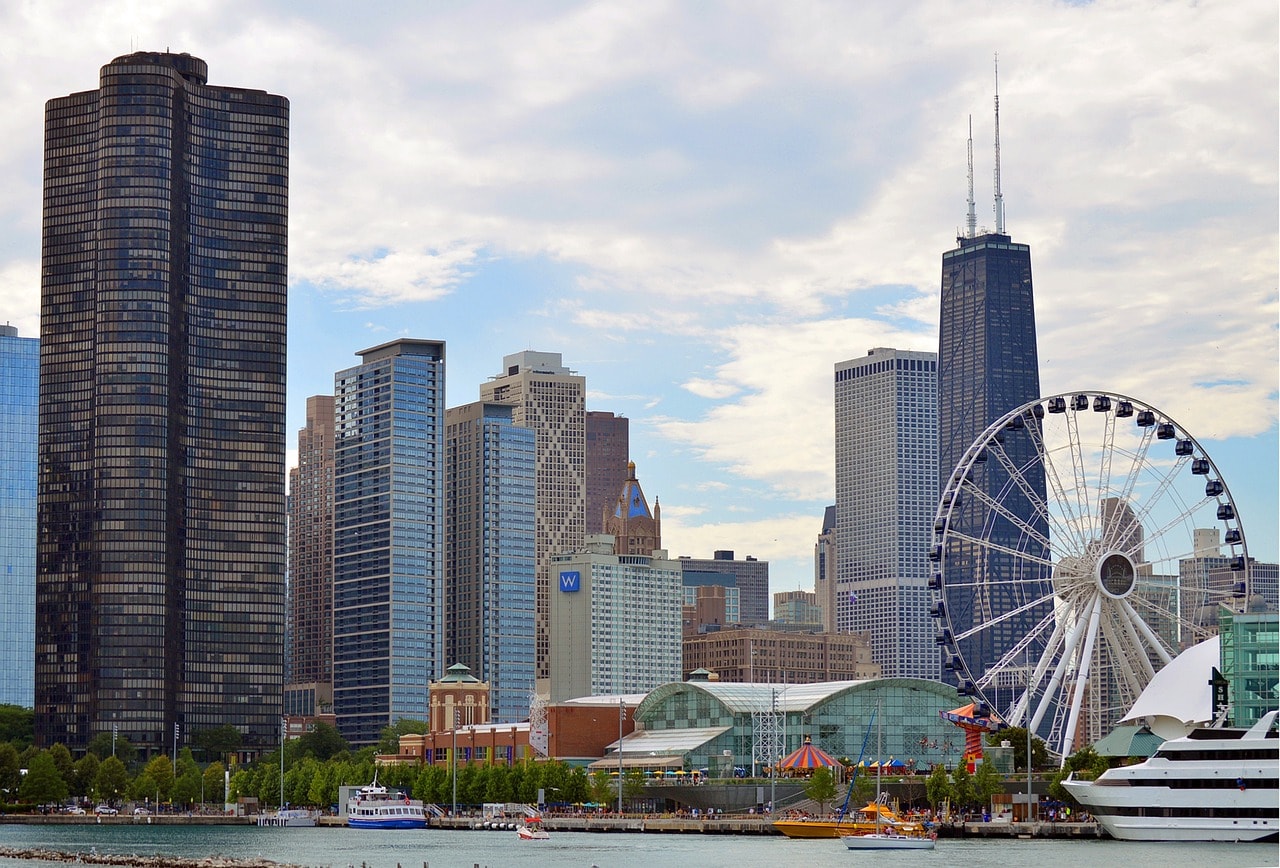
The Navy Pier is now one of the most visited sites in Chicago. Following the trend in major American cities where piers are converted into high-profile tourist attractions, the Navy Pier is the Chicago equivalent of Pier 39 at Fisherman's Wharf in San Francisco or Piers 15 to 17 in what is now known as New York City's Seaport in Downtown Manhattan.
The pier was built in 1915, extending just over a kilometer from the Streeterville neighborhood in the southern part of the Near North Side district, near where the Chicago River flows into Lake Michigan. The pier's purpose was to serve the city's shipping traffic, primarily as a dock for ferries and passenger ships. Its name was changed to Navy in 1927 in honor of the World War I veterans. During World War II, it was partially transferred to the U.S. Navy for military purposes.
Click here to purchase a ticket for the Navy Pier Ferris Wheel…
Over the years, the pier's condition deteriorated. Due to its ideal location right in the heart of the city, it was decided to repurpose it for commerce and entertainment. In 1995, the pier reopened as a pedestrian area lined with shops, restaurants, hotels, and entertainment venues. The pier also features the popular Chicago Children's Museum, a small amusement park with the Centennial Wheel Ferris Wheel, the Navy Pier Auditorium, and a host of other attractions.
The terminal building was preserved and now houses a museum that tells the story of the place. On the pier side, tourist-oriented ships are docked, and every day the pier is flooded with thousands of tourists flocking to the most attractive spot in downtown Chicago.
For the Downtown Pizza Walk, a tour following Chicago's pizza pie, click here…
Chicago Children's Museum
The Chicago Children's Museum at Navy Pier is one of the favorite spots for a family outing in the heart of Chicago. The museum is largely dedicated to educational programs and regularly hosts schools from across the metropolis. It began operations in 1982 and relocated to its current location in the western part of the enormous mall that is now the Navy Pier.
The museum features a wide range of exhibits, plenty of activities, and games, all with an education-oriented theme. Despite the educational nature of the museum, it's a fun place for a short family trip.
Address: E Grand Ave. 700, Chicago
Click here for the museum's current operating hours…
Click here for a culinary secrets food tour of Chicago…
The Magnificent Mile
The Magnificent Mile, or The Mag Mile for short, is the most prestigious part of Chicago that runs north from the DuSable Bridge on Michigan Avenue up to Oak Street in the north. The avenue crosses the Near North Side of Chicago north of the Loop, lined with impressive and historic skyscrapers, numerous shops, restaurants, and entertainment venues.
The Magnificent Mile got its name in the 1940s as a real estate marketing element. Today, it is the third most expensive retail street in terms of rent after the two most prestigious avenues in the USA – Rodeo Drive in Beverly Hills and Fifth Avenue in Manhattan.
Click here for the Chicago CityPASS, five top attractions in Chicago at a discount…
The Wrigley Building
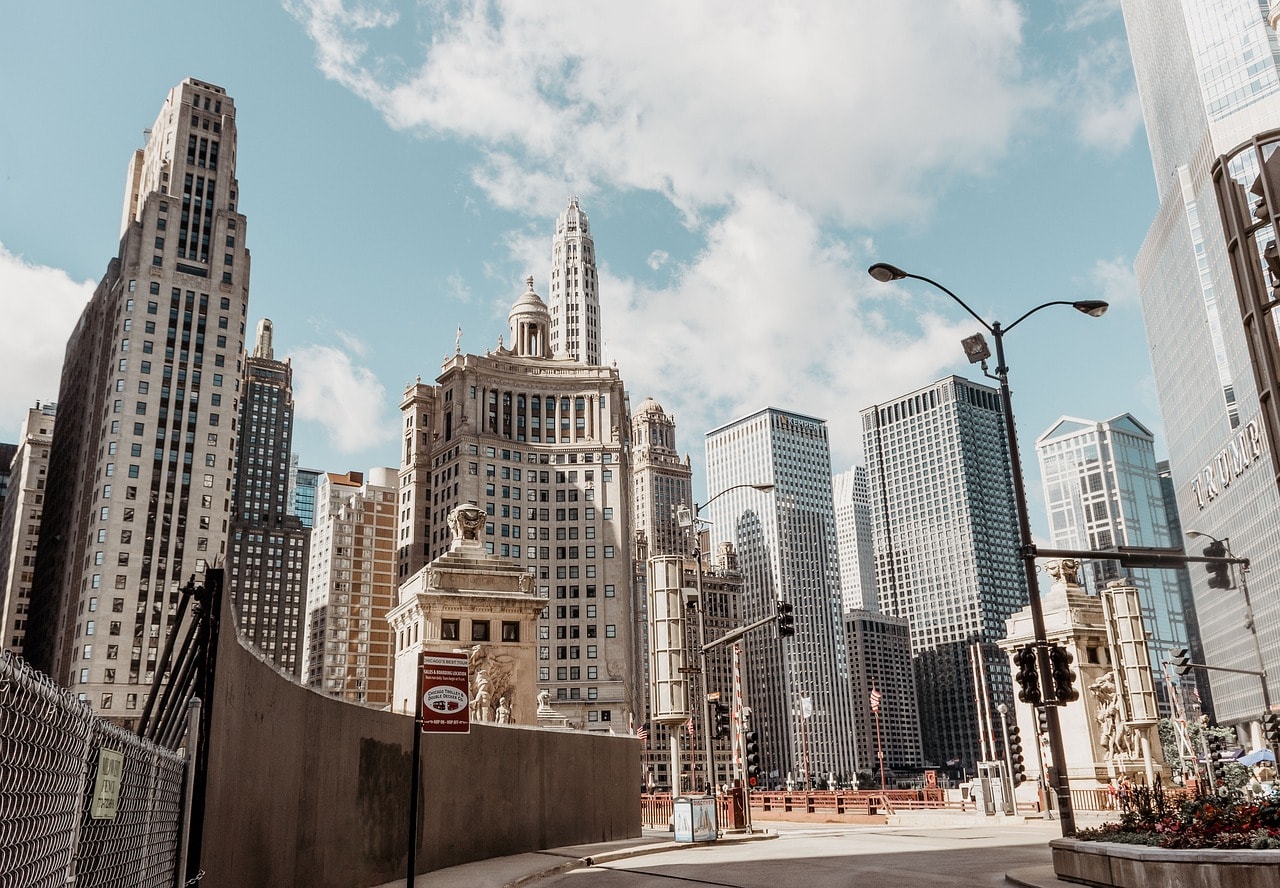
The Wrigley Building is one of the most beautiful and impressive historic buildings in Chicago. It is located in one of the city's most central spots, where Michigan Avenue crosses the Chicago River via the DuSable Bridge. The ascent onto the bridge from the avenue creates a funnel-shaped square, surrounded by some of the city's most striking buildings. In 1674, members of the Jesuit missionary expedition led by Jacques Marquette camped at the location of the Wrigley, marking the first time Europeans arrived in the city's area.
The building itself was constructed in 1920 with the investment of the famous chewing gum manufacturer William Wrigley Jr. First, the south building was completed, rising about thirty stories, and four years later, the north building was added, standing at 21 stories. Above the south structure, the impressive clock tower was built, towering high over Michigan Avenue. This tower was designed as a replica of the Giralda Tower, the famous bell tower of Seville's Cathedral in Spain.
Address: 400 Michigan Ave., Chicago
Tribune Tower
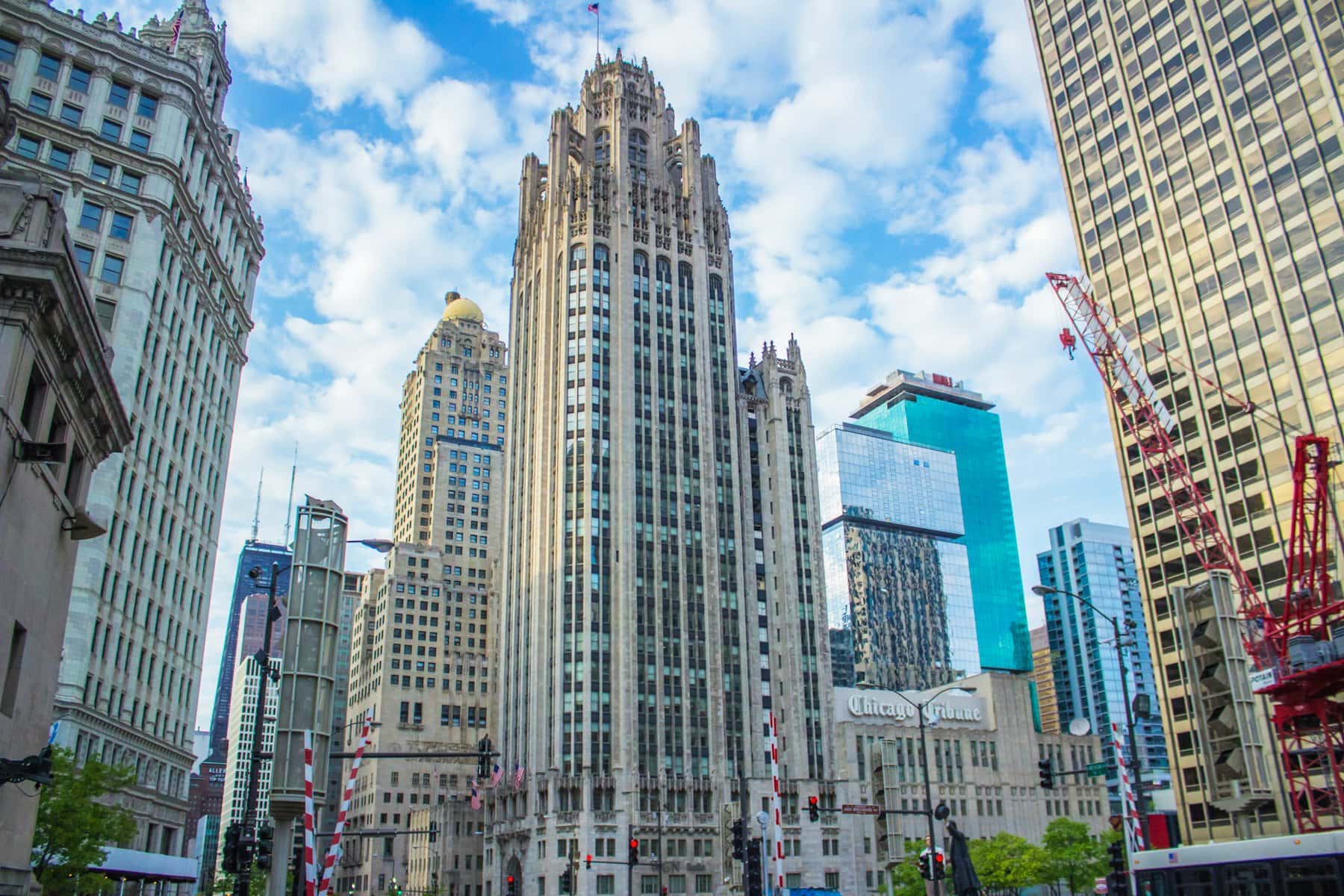
Alongside the construction of the Wrigley Building in the early 1920s, the impressive Tribune Tower was built opposite it. Both buildings established the approach to the DuSable Bridge as one of the most photogenic and impressive spots in Chicago. Skyscrapers were born in Chicago at the end of the 19th century, and the downtown area south of the river, within the Loop, was characterized by dark towers made of steel frames and bricks. The next phase in the city's skyscraper development was in the early 1920s with the construction of the towers on the southern edge of the Magnificent Mile, which were lighter towers made of limestone bricks.
The building originated from a competition held by the local newspaper between architectural firms, with the goal to build the newspaper's headquarters downtown. The competition aimed to create an office building that best embodies the values of integrity and beauty. Ultimately, the design by New York architect John Mead Howells was chosen, implementing Neo-Gothic values into the world of modern skyscrapers.
At the top of the building, standing at a height of 140 meters, is a row of flying buttresses characteristic of Gothic cathedrals in Europe. To this day, the tower is considered one of the most beautiful in the world, especially due to its impressive upper part.
Address: 435 Michigan Ave., Chicago
The InterContinental Chicago Magnificent Mile
The magnificent skyscraper that today is the flagship hotel in Chicago for IHG's luxury brand InterContinental, is located one block north of the Tribune Tower on the Magnificent Mile (Michigan Avenue). The skyscraper was built in 1929 in the Moorish Revival style, an impressive oriental style that was fashionable in Europe and America inspired by the movements of symbolism and orientalism.
At the top of the tower is a spectacular onion dome. Inside the hotel lobby, there are many architectural features combining oriental elements with Neo-Renaissance elements. It's worth joining the tours held within the hotel's public spaces, which explain the building's history and the thought behind its architectural elements.
Address: N Michigan Ave. 505, Chicago
Click here for a guided tour of all the architectural gems of Chicago…
Trump International Hotel & Tower Chicago
The luxurious Trump Tower is the most impressive modern skyscraper in Chicago. This massive structure was completed in 2009 and is currently the second tallest in Chicago, following the Willis Tower. Standing about 425 meters tall, it is situated right on the bend of the Chicago River, just one block west of Michigan Avenue. The shiny building was initiated by American real estate and industry mogul (and also reality star, president, etc.) Donald Trump, and it combines luxury residences with an equally upscale hotel. Nearby is the city's iconic parking tower, the Marina City Goldberg.
Address: 401 N Wabash Ave., Chicago

The Richard H. Driehaus Museum
The grand Nickerson House mansion, home to Samuel Nickerson, is located on Erie Street, just two blocks west of the Magnificent Mile. The building was erected in 1883 as the residence of the wealthy banker and his wife. The mansion was acquired by Richard Driehaus, and after extensive renovation, the 23 rooms of the mansion housed a vast collection of historic design items owned by the Driehaus Foundation. Today, the museum offers a stunning display of furniture, decorative items, and more from top American manufacturers, including a large collection of Tiffany designs.
Behind the mansion stands the magnificent building of St. James Cathedral, and nearby is the seat of the Episcopal Diocese of Chicago. Across from the mansion is the impressive Cable House, built in 1886.
Address: E Erie St. 40, Chicago
Click here for the museum's updated opening hours…
Click here for the Chicago CityPASS, five top attractions in Chicago at a discount…
The Gallery District of River North Neighborhood
River North neighborhood stretches west from Michigan Avenue and the Magnificent Mile, between Chicago Avenue to the north and the Chicago River to the south. It's a relatively quiet and upscale district where residential and business elements combine.
The main street of the district is West Superior, lined with no less than 65 art galleries. Around this street, you'll also find many quality shops offering vintage items and antique furniture.
Newberry Library
Newberry Library is located in the northern part of Washington Square Park. The library is the highlight of Walter Newberry's efforts, a wealthy banker and businessman who established the library in 1887, investing significantly in its architecture, which combines impressive Romanesque and Renaissance elements.
When it opened to the public in 1893, the library became one of the highest quality research institutes in the USA, boasting a rare collection of ancient books. This collection includes a 1481 copy of Dante Alighieri's Divine Comedy and the first edition of John Milton's Paradise Lost.
Address: W Walton St. 60, Chicago
Click here for the current operating hours of the research institute…
Historic Water Tower
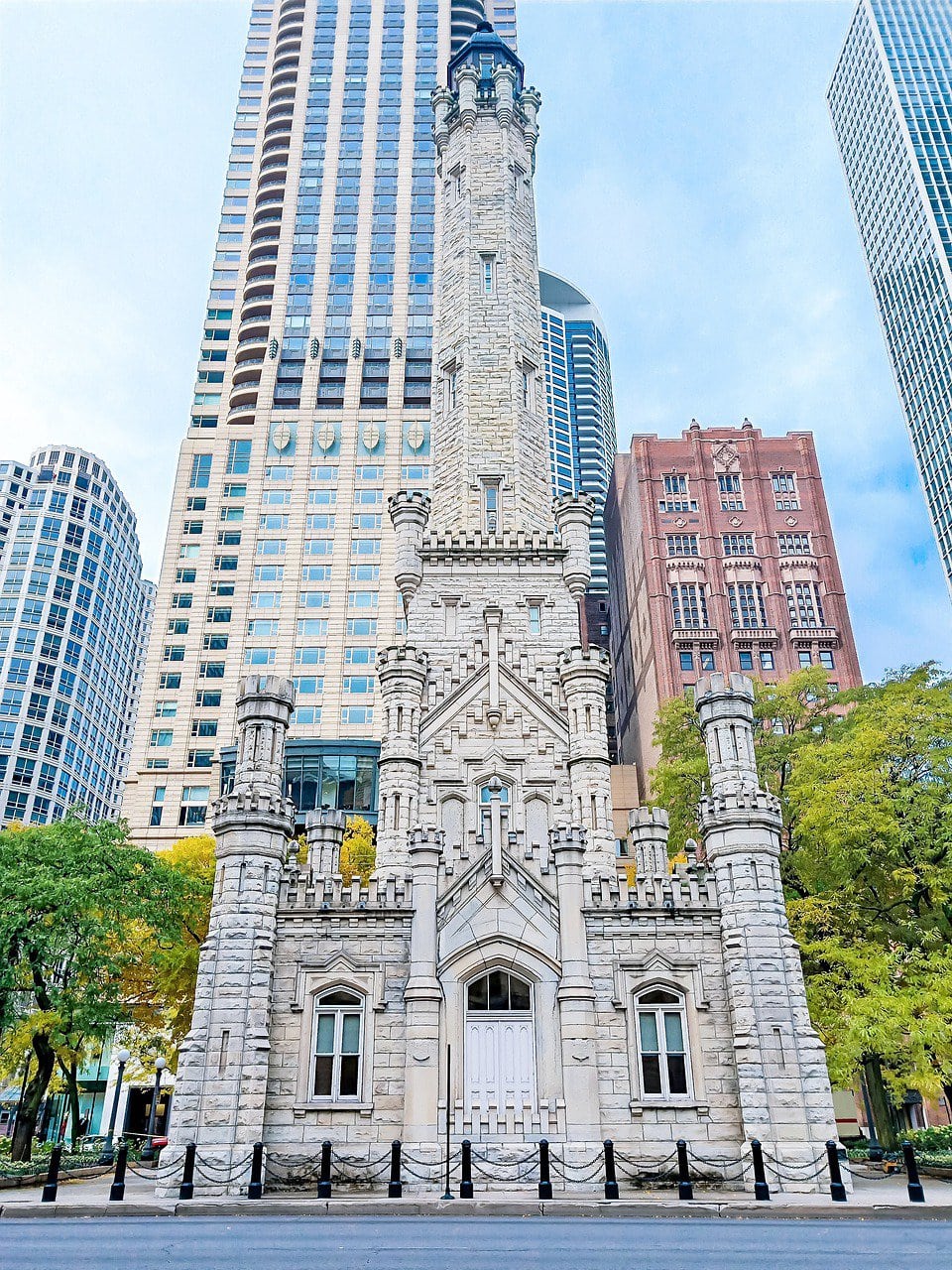
Chicago's Historic Water Tower is undeniably the ancient star of the Magnificent Mile, much like its neighbor the John Hancock Center is the modern one. This magnificent tower overlooks the Jane M. Byrne Plaza, two blocks south of the massive John Hancock Center. The city's historic water tower and pumping station were built in the late 1860s, just a few years before the Great Chicago Fire.
Miraculously (since it's a pumping station, it was filled with water) the building survived the fire, one of the few still standing in downtown Chicago and the only one still existing. The top of the tower rises to 47 meters. It resembles a campanile tower atop a medieval castle. The character and appearance of the tower are very much cherished by the city's residents, and a lot of effort is put into its preservation.
The Museum of Contemporary Art Chicago
The Museum of Contemporary Art Chicago is located at the western corner of Lake Shore Park, two blocks east towards the lake from the Magnificent Mile. The museum opened in 1967 and is one of the largest of its kind in the world. It mainly features rotating exhibits of contemporary artists and boasts groundbreaking architecture, especially in its new wing designed by architect Joseph Paul Kleihues.
Address: 220 E Chicago Ave, Chicago
Click here for the museum's current opening hours…
John Hancock Center
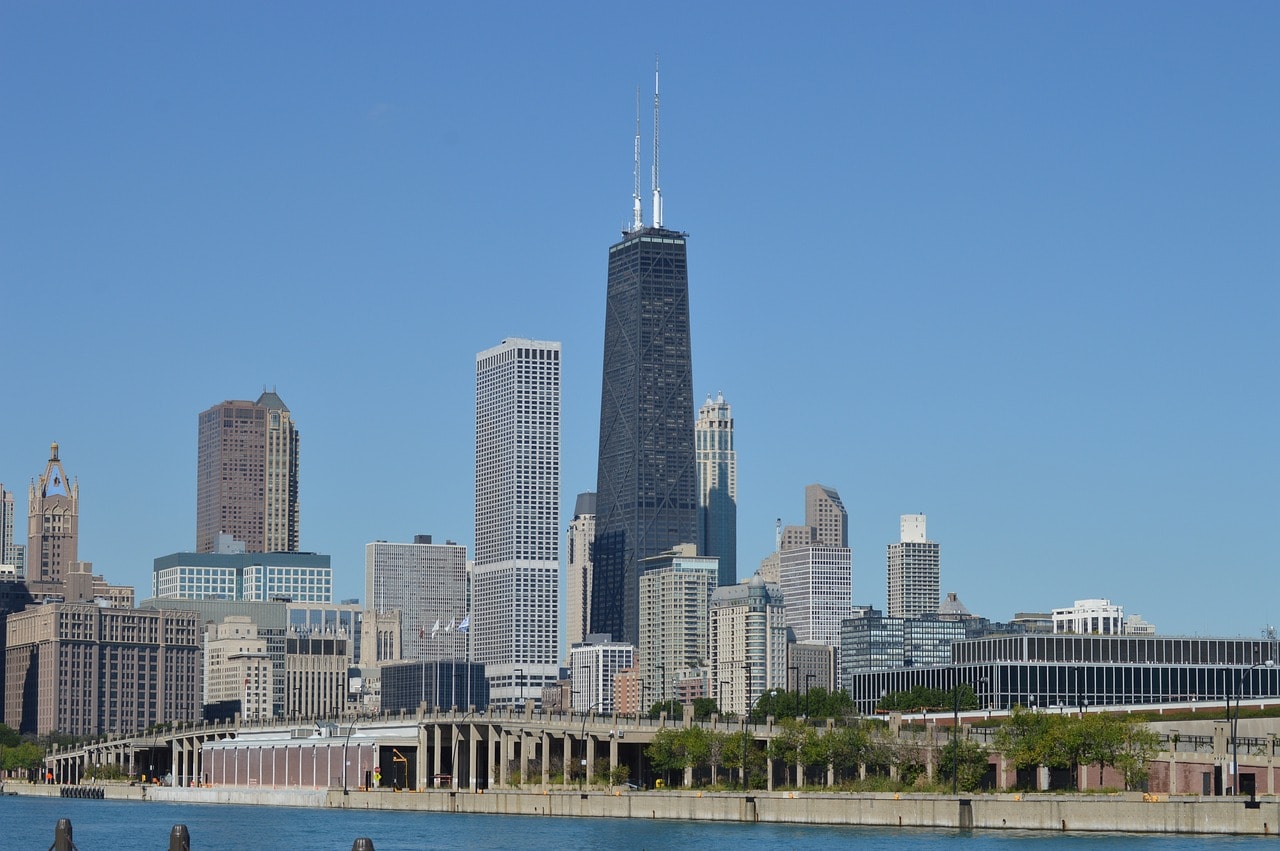
The John Hancock Center is the star of the Magnificent Mile (in shiny black). It's the slightly shorter big brother of the Sears Tower (Willis Tower). The John Hancock stands at 344 meters and has 100 floors. At its top, you'll find two iconic antennas each over a hundred meters tall.
The tower was built in 1969 by the same architectural firm that simultaneously designed the Sears Tower. For a brief time after its completion, it was the tallest building in the world. Today, it's the fifth tallest in Chicago but considered one of the city's most beloved and cherished landmarks.
The observation deck of the tower is on the 94th floor and is one of the city's favorite attractions. The tower has it all – restaurants, shops, and plenty of luxury apartments on the upper floors.
Address: 875 N Michigan Ave, Chicago

The Fourth Presbyterian Church
The Fourth Presbyterian Church dominates the west side of Michigan Avenue opposite the John Hancock Center. This historic church was completed in February 1871 and stood for just a few months before it was consumed by the Great Chicago Fire on October 8th of the same year. The church was quickly rebuilt and completed in 1874. Today, it is the second oldest structure on the Magnificent Mile after the historic Water Tower. The church’s neo-Gothic façade stands out against the backdrop of towering skyscrapers on the avenue.
One block south of the church is the seat of the Archdiocese of Chicago. This religious building also stands prominently against the backdrop of the Magnificent Mile's skyscrapers. The building was completed in 1919 in a stunning neo-Gothic style.
Address: 126 E Chestnut St, Chicago
The Drake (Hotel)
The historic building that today is home to the Drake Hotel is yet another example of the North Near Side's skyscraper golden age. Similar to the Intercontinental at the southern end of the Magnificent Mile, the Drake is also a stunning example of luxury hotel construction from the 1920s.
The hotel has more than 500 rooms and stands about 13 stories tall. It's made of limestone bricks, and its facade draws inspiration from the Renaissance palaces of northern Italy. Today, the location operates as a four-star hotel, but many who visit the building come to admire its magnificent structure.
Address: E Walton Pl. 140, Chicago
E Oak Street
If the Chicago Riverwalk is the most stunning part of the Magnificent Mile’s skyscrapers, the northern edge, Oak Street, is the ground zero for the city's luxury shopping. In the block between North State Street to the west and Michigan Avenue to the east, there's a dazzling concentration of Chicago's most luxurious boutique stores, both local and international luxury brands. Naturally, this block also features upscale urban hotels, galleries, and fine dining restaurants.
Oak Street Beach
East of the northern tip of Michigan Avenue lies Chicago's trendiest beach. Oak Street Beach is a gorgeous stretch of golden sand with lifeguard services and facilities that operates in the summer. It’s a very popular hangout for the affluent residents of the Magnificent Mile and tourists on sunny days. The beach is a thick strip of golden sand from lake sediment buildup.
At the southern part of the shore lies Lakefront Park, and just north of it is the Lakefront Trail promenade—a favorite spot among city residents for jogging and sports. On the northern part of the promenade is North Avenue Beach, where breakwaters create a collection of sand. This is also a highly popular relaxation spot for city dwellers, offering a breathtaking view of the North Side towers and downtown.