Upper Midtown – between Times Square and Central Park in Manhattan
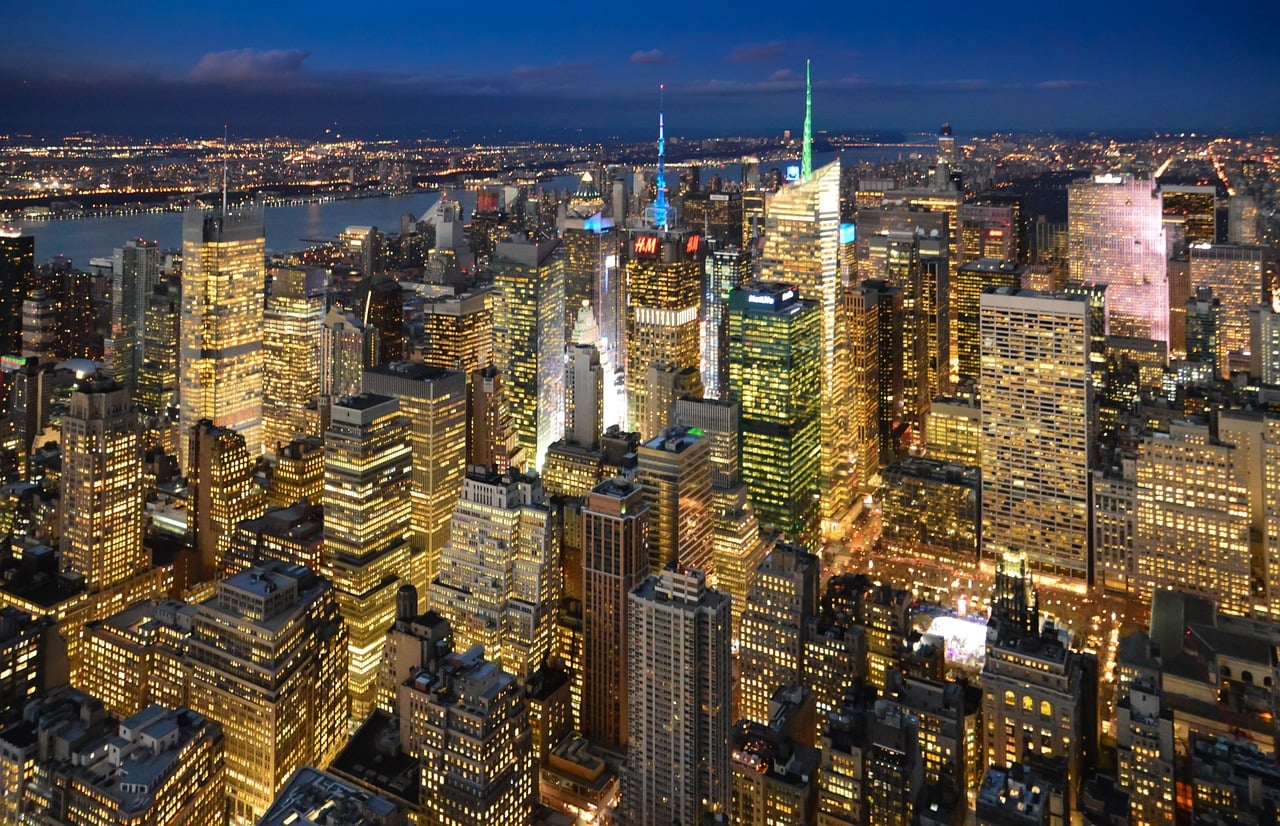
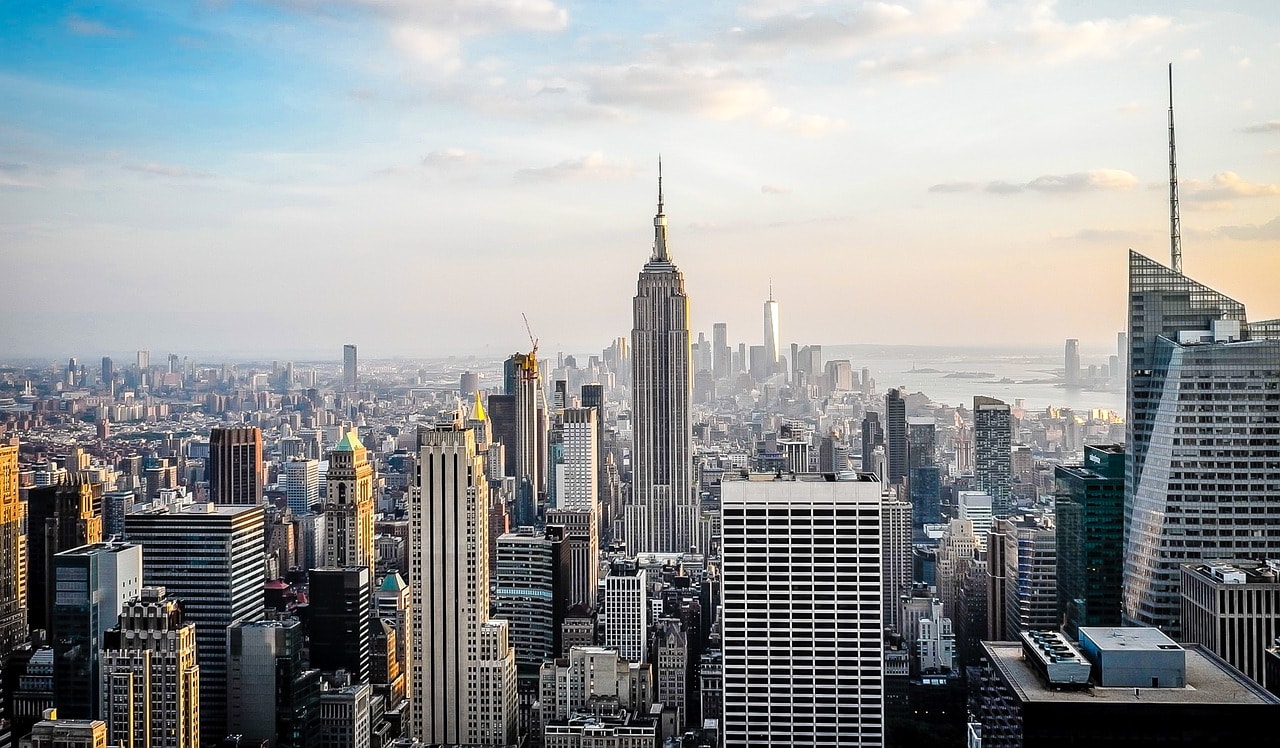
The Upper Midtown is the cultural heart of New York and the entire USA. Every evening, thousands of well-dressed people descend upon the theater district, where you'll find an absolutely amazing concentration of plays, musicals, cinemas, restaurants, and more. From Times Square northward to Central Park, there are dozens of main streets and avenues showcasing all the best of New York, including the city's best museums like the MoMA, important shopping and entertainment complexes like the Rockefeller Center, stunning skyscrapers, and unique architecture. Upper Midtown is the place to unwind after a day of wandering throughout Manhattan, with shopping, entertainment, and the best food in town.
How to get to Upper Midtown?
All the subway lines reach Upper Midtown, and between Times Square and Central Park, the trains create a grid of stations, almost every two blocks apart.
6 Must-See and Do Things in Manhattan's Upper Midtown
- Get lost in the neon lights of Times Square
- The mind-blowing art collection of MoMA
- A musical at one of the many fantastic Broadway theaters
- The Prometheus statue at the Rockefeller Center's main plaza
- Rub shoulders with the rich at The Plaza
- Coffee and relaxation in Bryant Park
Click here for all the information on traveling in New York City…
Click here for a list of 12 great hotels in Manhattan…
Click here to check availability and prices at Midtown Manhattan hotels…
Map of Upper Midtown in Manhattan
The Main Avenues of Central Midtown
Broadway
Broadway is the avenue upon which the entire layout of Midtown, and all the areas north of Downtown, was built according to the master plan of 1811. The design was based on wide avenues running north-south and relatively narrow and tightly packed streets running east-west. The grid pattern is intersected diagonally by the broad and vibrant avenue, creating a central square wherever it meets an avenue. Broadway is associated with the world of entertainment and theaters, and along it are more than forty large theaters, mainly in the Midtown area.
Click here for a guided walking tour of Times Square and the Theater District…
Technically, the avenue begins at the northern end of Manhattan in the Inwood neighborhood, but its main importance is in Midtown and Downtown. Broadway is a major avenue that runs north to south through the Upper West Side, but at 78th Street, it veers east, cutting diagonally through all of Manhattan until Battery Park, the southern tip of the island. Needless to say, it is the longest avenue in Manhattan and the main life artery of the long island.
In Midtown, the avenue intersects with other avenues to form Columbus Circle at the southwest corner of Central Park, Times Square at its meeting with Seventh Avenue, Herald Square at its meeting with Sixth Avenue, Madison Square at its meeting with Fifth Avenue and Madison Avenue, and Union Square at its meeting with Park Avenue. The avenue is also the main street of SoHo and the gateway to Wall Street in Downtown.
Avenue of the Americas (6th Avenue)
6th Avenue is the heart of Midtown. It stretches from Central Park in the north down through Midtown and SoHo to Tribeca. This avenue truly represents the strength of Manhattan, with many points of interest along its way. It intersects with Broadway at Herald Square, where Macy's is located.
A bit further north is the Rockefeller Center and Radio City Music Hall. Just west of the avenue is 6½ Avenue, an attractive pedestrian passage stretching from 51st Street south to 57th Street. This mini-avenue, opened in 2011, runs through the pathways and alleys between the blocks.
Seventh Avenue
Seventh Avenue is affectionately known as Fashion Avenue because of its importance in the development of the Garment District in the southern part of Midtown, which it crosses. This avenue stretches from Central Park south to Houston Street in the southern part of Greenwich Village. The highlight of Seventh Avenue, and its peak intensity, is of course the iconic Times Square, probably the heart of Manhattan, where it intersects with Broadway Avenue.
Around Times Square, both on the avenue itself and its neighboring streets, there are dozens of theaters. This area is the pinnacle of evening culture and entertainment in the big city.
Eighth Avenue
Eighth Avenue stretches from Central Park in the north to Hudson Street along the western fringe of Greenwich Village in the south. The avenue runs in a straight line northward from the southwest corner of the park at Central Park West Avenue. It's generally considered to be the western border of Midtown's central part, with significant transportation hubs like Penn Station and the Port Authority Terminal along its route.
West of it are Midtown neighborhoods such as Chelsea, Hudson Yards, and Hell's Kitchen. The intersection of the avenue with Broadway is at Columbus Circle, marking the southwest corner of Central Park and essentially the starting point of the avenue heading north.
Times Square
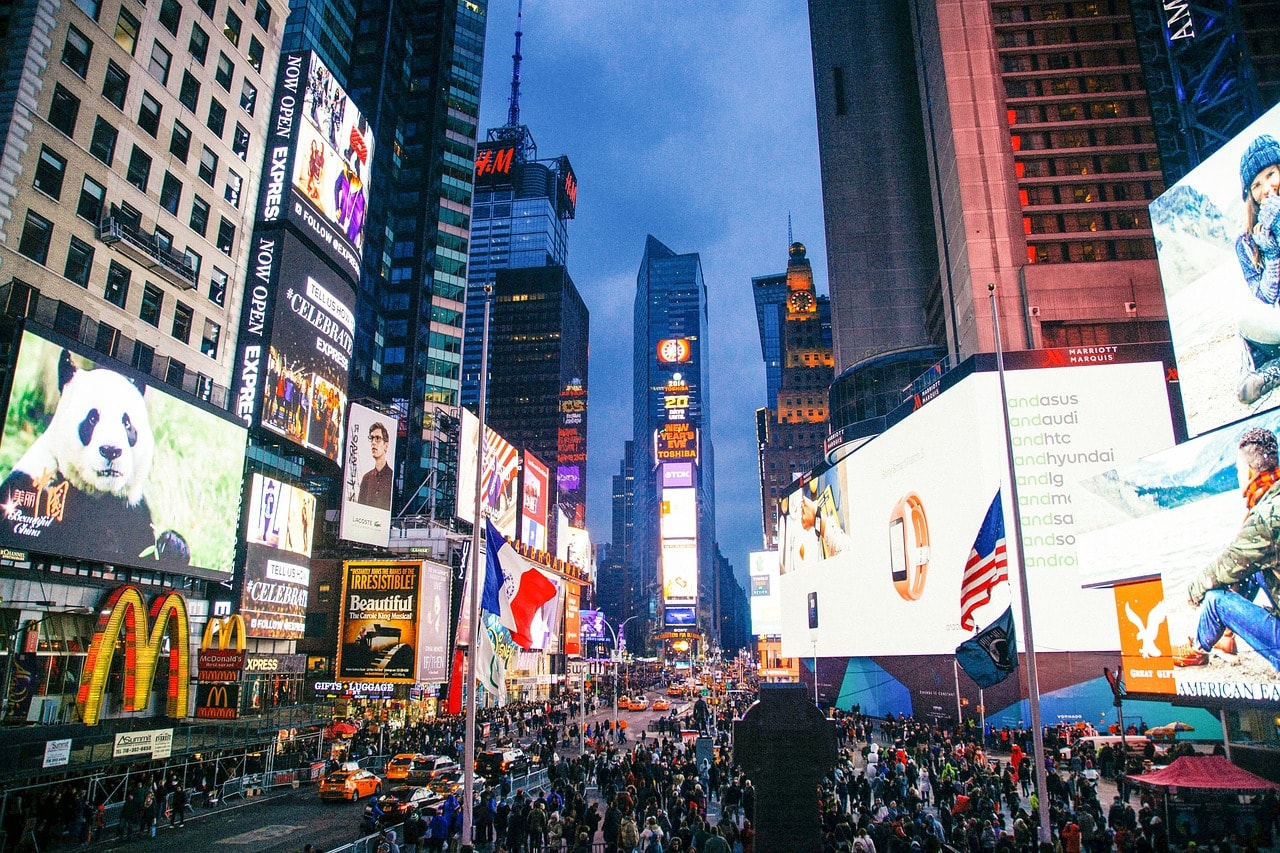
Times Square is the heart of Manhattan and, accordingly, the heart of New York City, and beyond that – the pinnacle of America as a whole. The iconic square, named after the well-known New York newspaper, is the meeting place of Seventh Avenue and Broadway. In and around the square are dozens of theaters at the peak of the concept of Broadway, as a symbol of New York City's central entertainment hub.
The area around the square is called the Theater District, and every evening, the neon-lit square is flooded with thousands of tourists and visitors coming to the theaters while bustling through the shops, chains, and restaurants of the humming square. Surrounding the square are well-known skyscrapers, giant hotels, and important New York sites, foremost among them, the city library backed by the charming Bryant Park. Times Square is alive and breathing at all hours of the day and night, and it is the most dazzling symbol of the city that never stops.
Click here for all the information about Times Square and the nearby sites…
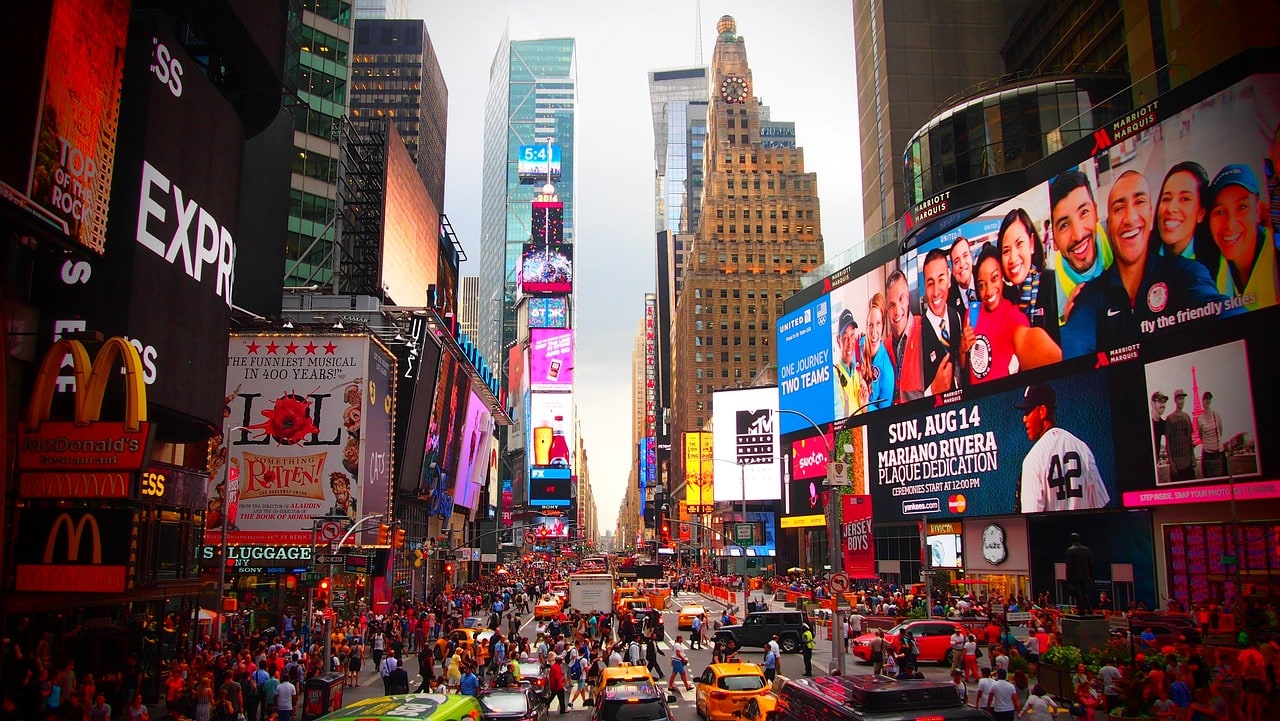
Upper Midtown – Between Times Square and Central Park
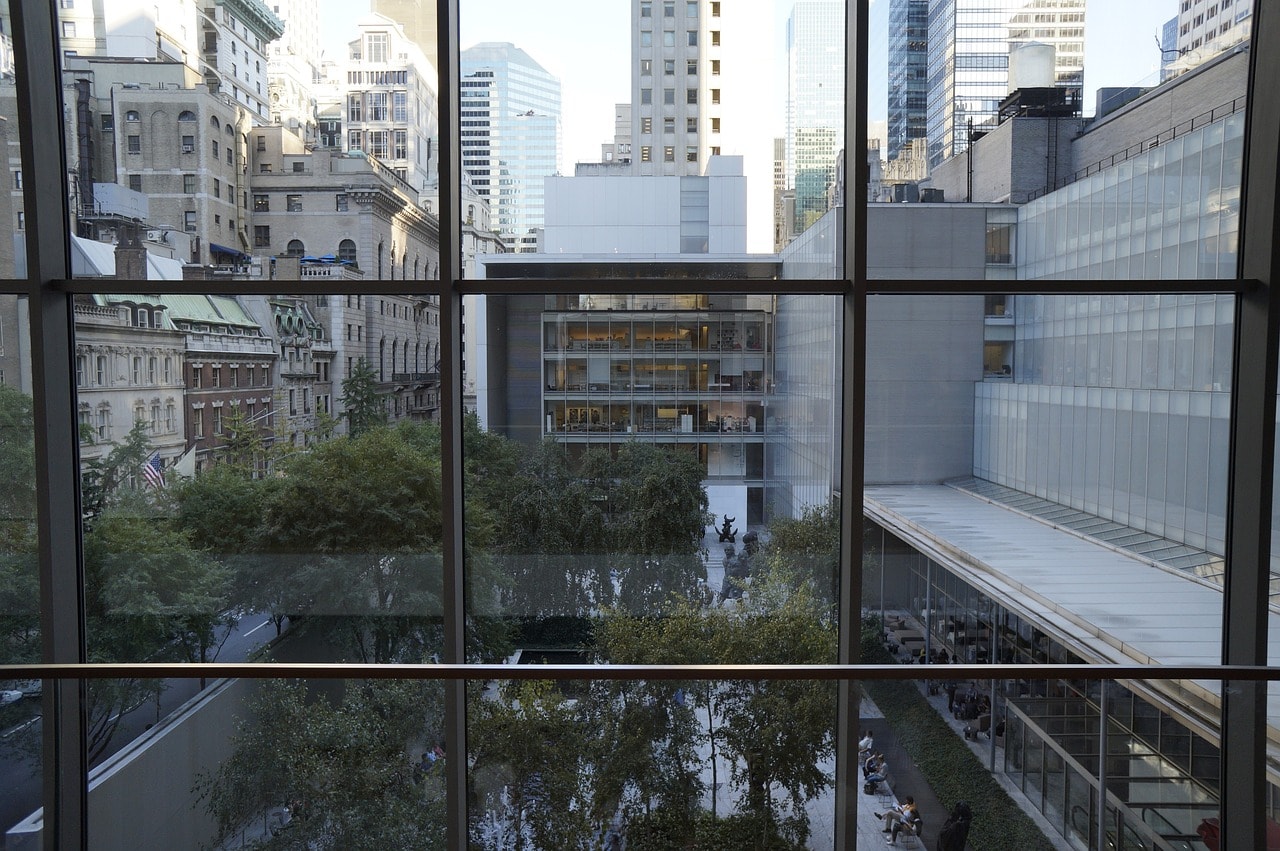
Museum of Modern Art MoMA
The MoMA is one of the most important museums in New York and the USA. Similar to the relationship between the Louvre and the d'Orsay in Paris, MoMA complements the vast collection of the Metropolitan and displays some of the most important works of the modern era. The museum is located on East 53rd Street between Fifth and Sixth Avenue. It was founded in 1929 at the initiative of Abby Rockefeller and her friends Lillie Bliss and Mary Quinn Sullivan. Over the years, the museum's collection has grown and today it includes some of the most iconic works of great artists. The museum also features a very impressive sculpture garden at its center.
Click here to purchase MoMA entry tickets online…
MoMA Collection
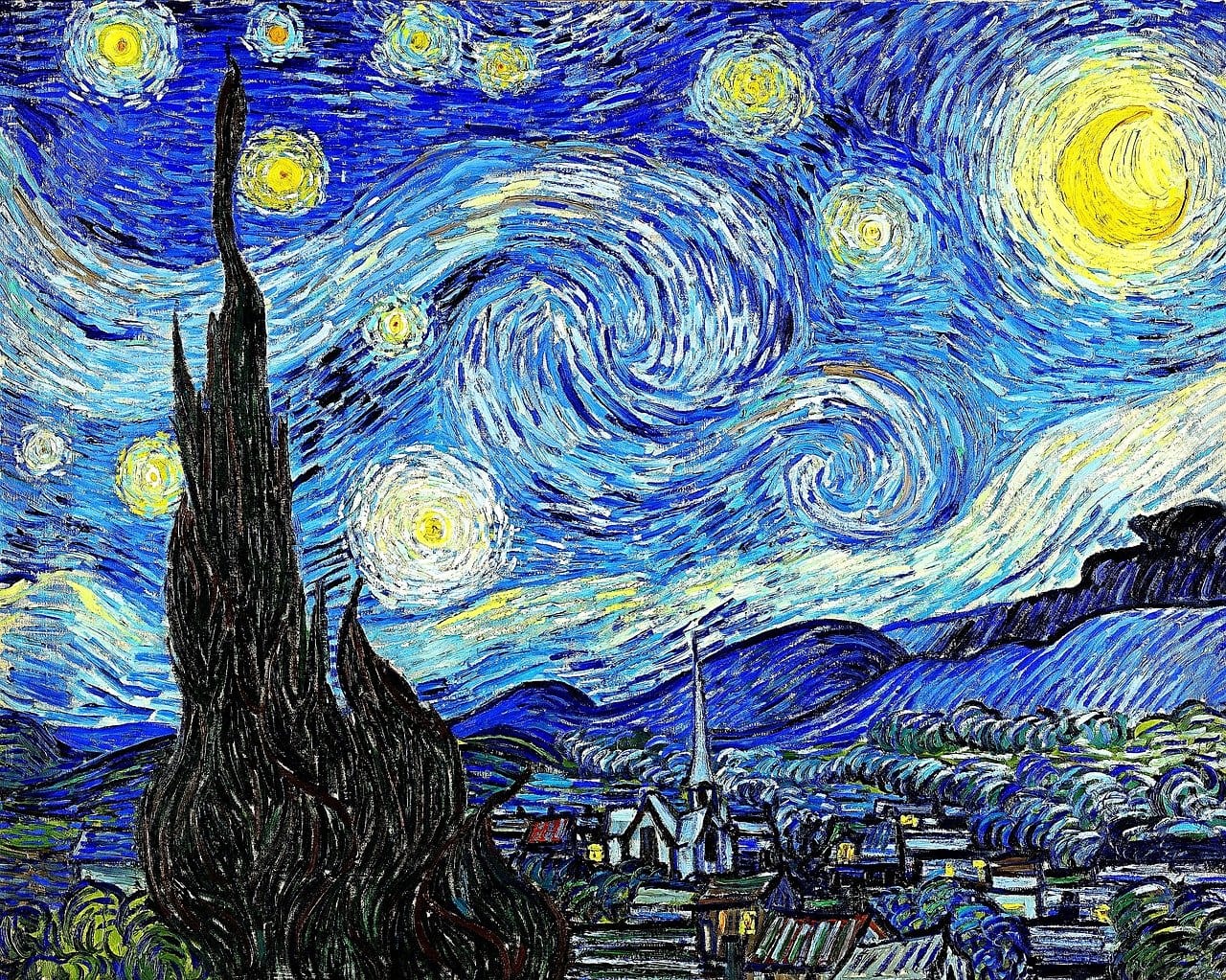
- The MoMA boasts an extraordinary amount of significant paintings from all movements of modern art – from Impressionism to the popular culture of the USA in the 1950s
- The most important painting in the collection is “Les Demoiselles d'Avignon” by Pablo Picasso from 1907, almost officially considered (Georges Braque and his supporters disagree) the first Cubist painting
- The most important American painting in the collection is Andrew Wyeth's painting “Christina's World” from 1947. This painting is considered one of the masterpieces of American art, depicting Christina crawling in a field and looking towards her farmhouse
- The collection includes a large variety of paintings by Vincent van Gogh, especially featuring the magnificent “Starry Night” by the Dutch artist
- The iconic “Dance 1” by Henri Matisse is among the most important works by the famous French artist
- The collection also includes the paintings “The Sleeping Gypsy” and “The Dream” by the naive artist Henri Rousseau
- In the museum, you can also see other masterpieces such as one of Claude Monet's water lily paintings, Paul Cézanne's painting “The Bather”, Giorgio de Chirico's “The Song of Love”, Salvador Dalí's painting “The Persistence of Memory” (the melting clock), and Marc Chagall's famous painting “I and the Village”
- On the abstract side, there are some groundbreaking works, including Piet Mondrian's important “Broadway Boogie-Woogie” and Kazimir Malevich's painting “White on White”
Address: 11 W 53rd St. New York
Click here to buy tickets online (skip the line) for the MoMA Museum…
Click here for all the information on planning a visit to MoMA…
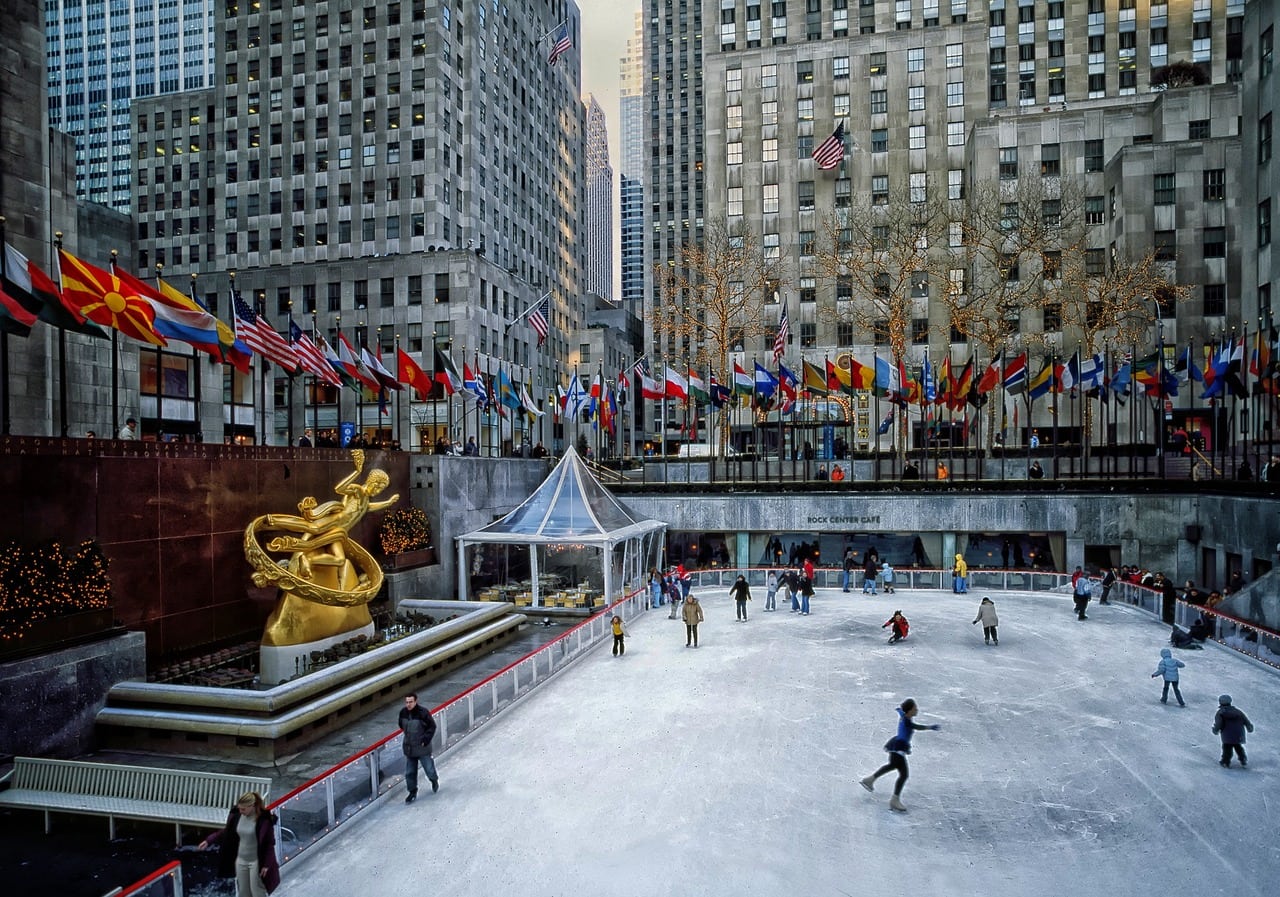
Rockefeller Center
The Rockefeller Center is one of the most important sites in the central midtown area, between Central Park and Times Square. The complex includes about 19 commercial and business towers in two complexes. The center occupies two entire blocks between Fifth and Sixth Avenues and between 51st and 49th Streets.
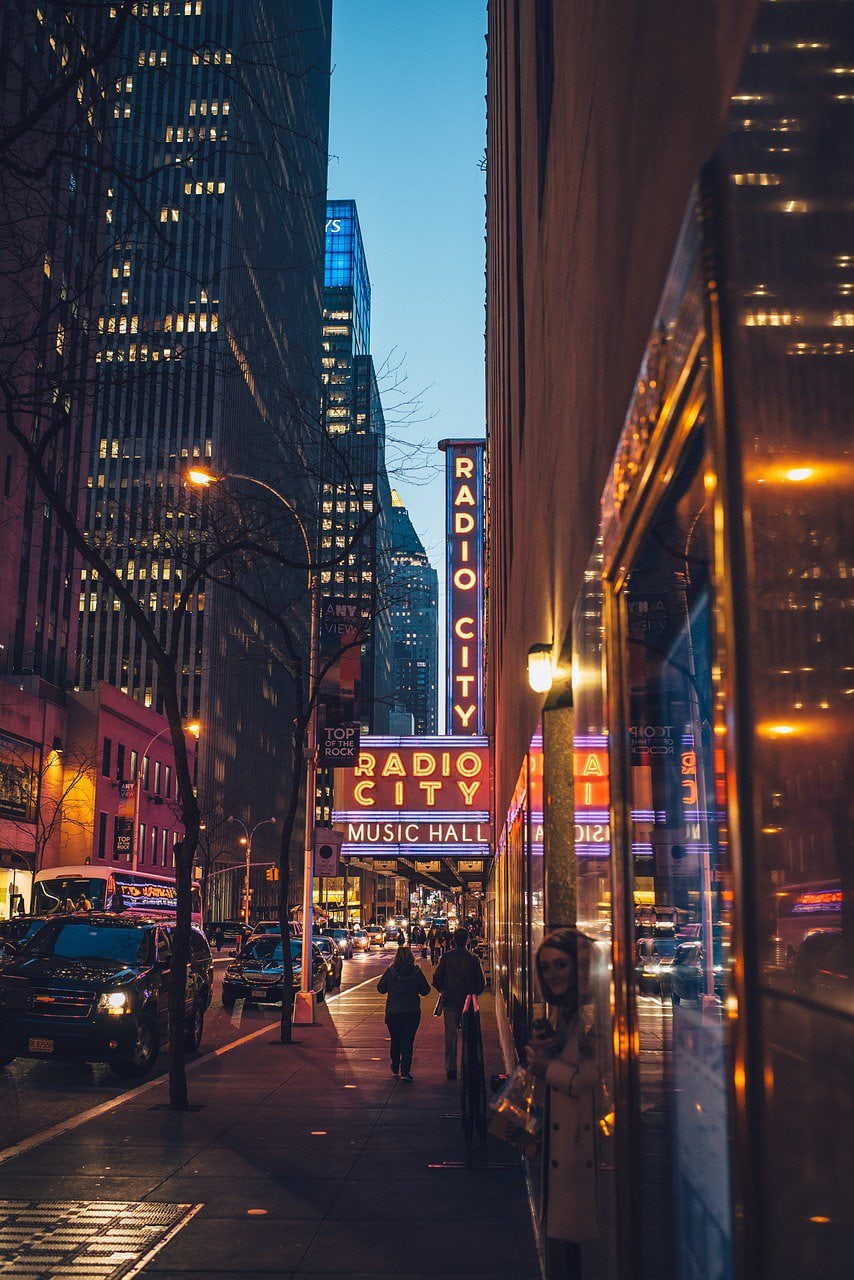
In the northern complex is Radio City Music Hall. The first complex was built in the 1920s in Art Deco style. An additional expansion of the center with four more buildings took place in the 1960s. The central part of the center is the plaza that every winter turns into an ice skating rink, with the giant Christmas tree above it. Above the tree is the famous Prometheus statue by Paul Manship. At the entrance towards Fifth Avenue stands the statue of Atlas carrying the world on his shoulders. On the top of the tallest tower of Rockefeller Center, there is an observation deck.
Click here for entry tickets to the Top of the Rock observation deck at Rockefeller Center…
Radio City Music Hall
The northern part of the Rockefeller Center complex houses the Radio City Music Hall. Radio City is a performance hall with 6000 seats that hosts dance performances, shows, and also film screenings, making it considered the largest cinema in the world. The hall hosts major ceremonies of New York's cultural and glam world such as the Emmy, Tony, and Grammy awards.
Carnegie Hall
Carnegie Hall is the largest and probably the most famous concert hall in New York. It is located on Seventh Avenue between 56th and 57th Streets. The vast hall was built in 1891 with meticulous attention to acoustics. To this day, the hall is considered one of the best in the world acoustically, hosting concerts of the world's top performers. You can visit Carnegie Hall in guided tours or, of course, purchase tickets for concerts.
Click here to plan a visit to Carnegie Hall…
The Plaza Hotel
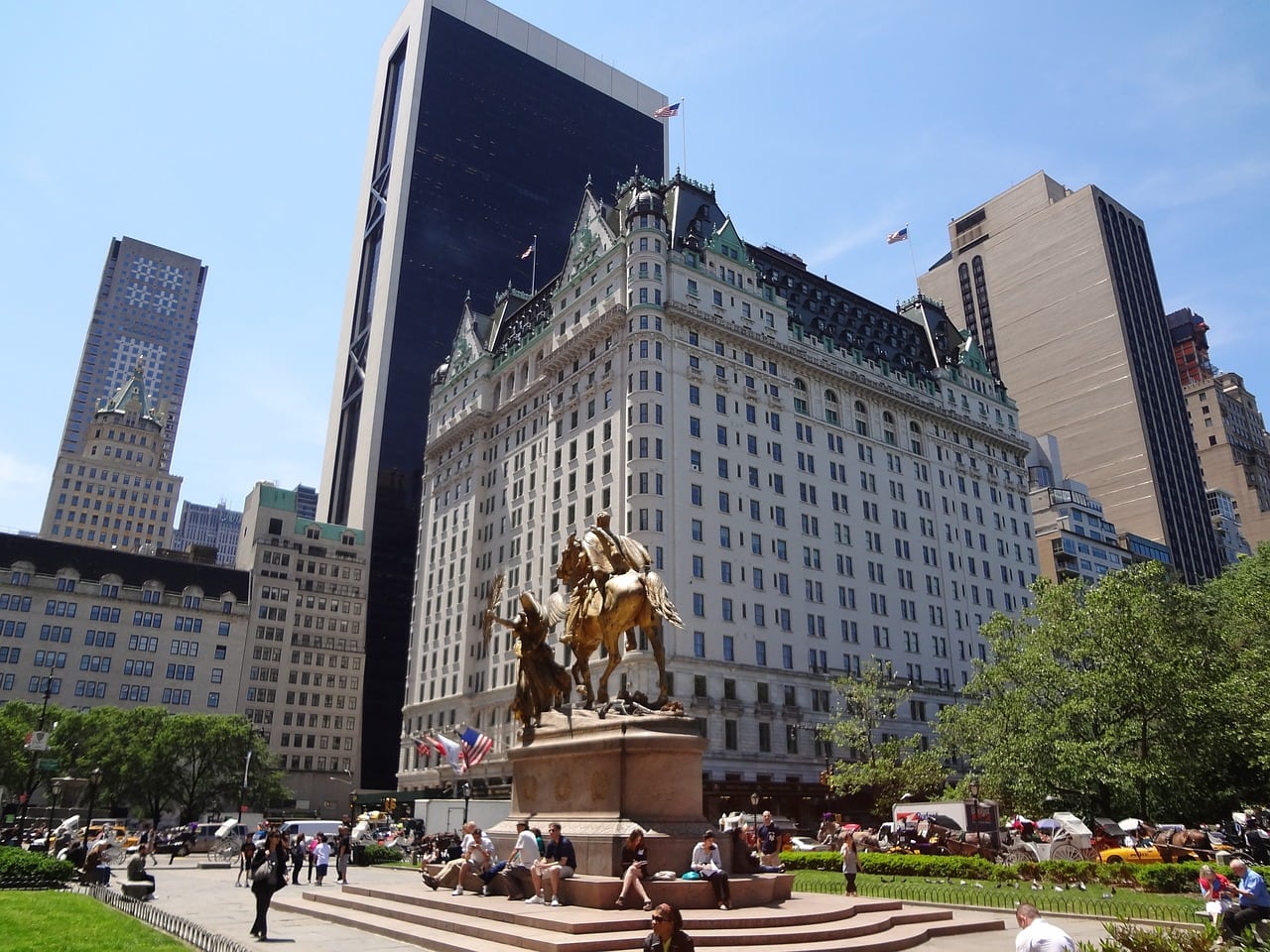
The Plaza is probably the most famous hotel in New York. While its architecture may be less impressive than that of its declared competitor, the Waldorf Astoria, when it comes to the luxury market, the Plaza's location is its biggest win. The Plaza is nestled in the southeast corner of Central Park, with its northern side facing the park and its eastern side facing the Grand Army Plaza on Fifth Avenue, home to New York's famous Apple Store.
The hotel boasts more than 800 rooms and was built in 1907. Its impressive façade faces the park, which makes it one of the most photogenic landmarks in New York. Inside, you'll find luxurious ballrooms, high-end shops (seriously expensive!), and a variety of indulgences that only a select few really wealthy individuals can afford.
Click here to check availability and prices for a stylish stay at New York's Plaza…
Alwyn Court
Halloween Court is one of the most impressive residential buildings in Manhattan. It is located on Seventh Avenue and West 58th Street. The building was constructed in 1909 and is considered one of the most striking and ornate among the city's residential buildings. Its character evokes the European architectural style of cities like Barcelona, with extra ornamentation and a blend of Art Deco and Art Nouveau elements. The symbol of the building is the salamander relief at the entrance made of terra cotta stones. The building has an impressive inner courtyard.
Click here for a full-day guided tour of all the main attractions of Manhattan…
The New York City Center – the urban center for music and dance
The unique structure of the city’s opera and dance, located on West 55th Street between Sixth and Seventh Avenue. The building was originally a meeting place for the Freemasons when it was constructed in 1924. It was intended for demolition during the 1940s but received preservation status due to its stunning architecture in a Moorish-Spanish style. In 1943, the city’s dance company and opera settled there, and since then it has become a popular cultural hall.
Museum of Arts and Design
This special and efficient museum is located in the southern part of Columbus Circle between Eighth Avenue and Broadway. The museum focuses on the artwork and design of the greatest modern designers, and it houses a massive collection of more than 2,000 groundbreaking design pieces. The designs are made from industrial materials such as glass, wood, galvanized iron, and more.
Click here for all the information on visiting the Museum of Arts and Design…