North of Washington's Mall – The White House and Downtown
North of the Mall, Washington is an everyday kind of city. Aside from the White House and the institutions at Lafayette Square, downtown Washington, Georgetown, and Foggy Bottom are wonderful places for exploring local sights rather than monumental national institutions. In the area, you'll find excellent museums, delightful streets with restaurants and shops, charming canals, and historical sites. To the north, you'll find the impressive Washington Cathedral and the National Zoo, which is a big hit with kids.

How much time should you spend exploring the parts north of the Mall in Washington?
For an itinerary covering the northern parts of Washington, from Foggy Bottom to the National Cathedral and the National Zoo, it's worth dedicating at least a full day. For Georgetown, set aside a leisurely half-day trip.
Click here for a list of 10 excellent hotels in the heart of Washington…
10 Must-See and Do Things in Downtown Washington and Georgetown
- Wave hello to the President of the USA at the White House
- The Presidential Church named after St. John
- Architecture at the Octagon Museum
- The Archaeology of Fabrics at the George Washington University Museum and Textile Museum
- Chill out or soak up the sun and river views at the Kennedy Center for the Performing Arts
- The Best of Renoir in the Phillips Collection
- The monumental structure of the National Cathedral
- Enjoy time with the kids at the Smithsonian National Zoo
- Relaxing afternoons by the Chesapeake and Ohio Canal in Georgetown
- Byzantine and Pre-Columbian Art at the Historic Dumbarton Oaks Museum
Click here for all the information on a trip to Washington D.C…
Click here to check availability and prices at hotels in Washington D.C…
How to Plan a Tour Route in the Downtown of Washington and Georgetown?
- The tour route in parts of Washington D.C. north of the Mall starts, of course, at Lafayette Square, where the nerve center of the governing authority is located.
- The White House connects the monumental National Mall with the historic city of Washington.
- Connecticut Avenue axis connects Lafayette Square to the south with the interesting downtown sites such as the Phillips Museum and Woodrow Wilson House.
- The avenue continues north toward the National Cathedral and the National Zoo.
West of the White House, there's a walking trail in the Foggy Bottom neighborhood, home to the George Washington University campus and the Kennedy Center for the Performing Arts.
Beyond the Potomac Rock Creek lies the historic Georgetown district, with its main area near the Chesapeake and Ohio Canal Trail. In Georgetown, you should also visit the northern part of the neighborhood where you'll find the wonderful Dumbarton Oaks museum and nearby Tudor Place.
Click here for a day trip from New York City to all the major sites in Washington DC…
Map of all sites north of downtown Washington DC
North of the Mall – The White House and Foggy Bottom
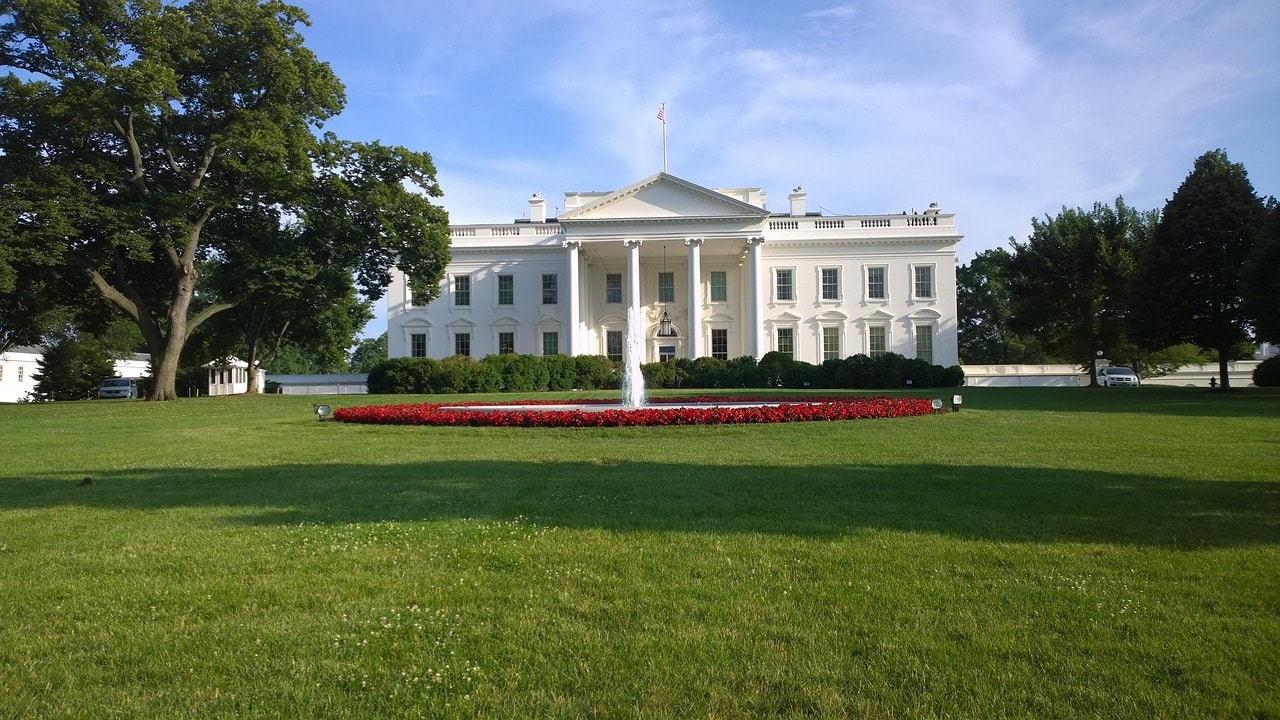
The White House
The White House is the official residence of the President of the United States. It is located north of the National Mall, separated by the Ellipse, a large park with a huge lawn. At the northern part of the Ellipse is the National Christmas Tree. In front of the White House is the President's Park. The best view of the White House front is on the road near the National Christmas Tree.
The house itself was built at the end of the 18th century. It became the official residence of the second president, John Adams, and since then all U.S. presidents have lived there during their terms. The White House is one of the most famous symbols of the USA. The debate about its name arises from a theory that it was called so because it was painted white after the British set it on fire in 1814, as part of the War of 1812 between the USA and Britain. Apparently, the house was painted white before and received its nickname before it was set on fire.
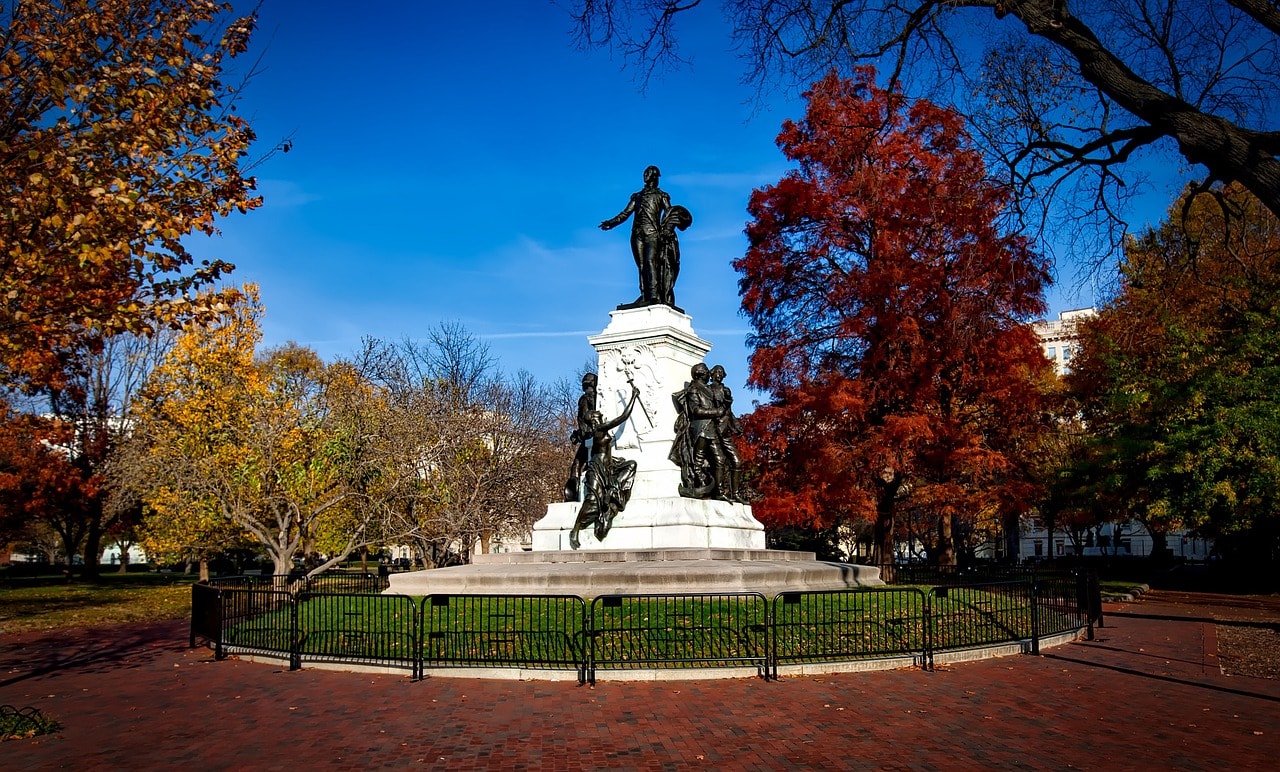
You can get closer to the White House from the back (north) side, through Lafayette Square Park. In the heart of the square, you'll find the statue of General Andrew Jackson riding his horse. At the edge of the park, on Pennsylvania Avenue, you can see the rear of the White House. This is traditionally the spot where demonstrations on every issue in the world are held.
In the past, visitors could enter the White House, but since September 11, 2001, this has been temporarily halted. The house is divided into three wings: the iconic central hall with the famous facade, the East Wing, and the West Wing where the Oval Office is located.
Address: Pennsylvania Avenue NW, 1600, Washington
Treasury Building
The Treasury Building, the administrative center of the U.S. Department of the Treasury, is located to the left of the White House, within the complex itself. The impressive building's rear faces 15th Street, which is accessible to the public eye. This striking neo-classical building was constructed in the mid-19th century. Its rear features two entrances with columns topped by pediments on each side, connected by a long row of Ionic columns creating a lengthy colonnade.
Facing the White House, it resembles a classical temple with 9 Ionic columns and a massive, blank pediment above them. At the official entrance to the building stands the statue of Alexander Hamilton, the first U.S. Secretary of the Treasury. Since the facade isn't visible to the public, except from the closed White House complex, it can be seen adorning the 10-dollar bill since 1928.
For daily bike rentals for a tour in Washington D.C., click here…
St. John's Episcopal Church
The charming church in honor of Saint John is located north of Lafayette Square. The church is recognized as the official presidential prayer site, and all U.S. presidents occasionally attend Sunday services here. It's a lovely structure with light yellow bricks, combining neo-classical architecture at its front with a very elegant white bell tower. The church was built in 1816 during President James Madison's time, and since then every U.S. president has visited for Sunday services (some more frequently than others).
Address: H St. NW, 1525, Washington

Renwick Gallery and Smithsonian American Art Museum
The Renwick Gallery is housed in an elegant red brick building on the west side of Lafayette Square. The gallery is part of the Smithsonian, the national museum research institute, and it holds the national collection of decorative arts and crafts. The museum features a permanent collection as well as an intriguing revolving design collection showcasing innovative decorative sculptures. The upper part of the building has been converted into a grand ballroom where special events are held.
Address: Pennsylvania Avenue NW #1, 1661, Washington
Click here for the museum's latest opening hours…
The Octagon Museum
The small historic building with the reddish bricks is situated next to the White House to the west. It was built in 1801 and is one of the oldest buildings left in Washington. This residential building was one of the first constructed under the capital's urban master plan. The house was home to John Tayloe III, a close friend of George Washington. Later, it was the residence of President James Madison while the White House underwent major renovations after the destruction left by the British in 1814.
Today, the house operates as a small museum by the Architects Association. The museum features displays on Washington's lifestyle in the early 19th century and a variety of architectural exhibits related to the city's construction.
Address: New York Ave NW, 1799, Washington
Click here for the museum's current opening hours…
George Washington University
The George Washington University campus is located in the streets west of the White House and Lafayette Square, in the Foggy Bottom neighborhood. It's a particularly large private university institution, with an average of 20,000 to 30,000 students enrolled each year. Students are required to live near Foggy Bottom and Downtown Washington, which makes the area north of the Mall especially young and lively. The campus itself is pleasant to walk around, similar to other prestigious campuses in the USA. The important spot here is the Textile Museum in the official university museum.
The George Washington University Museum and The Textile Museum
The Textile Museum and the George Washington University Museum are located in the heart of the campus at University Yard. The university's collection is primarily based on the legacy of Albert A. Small, which includes many documents and records from old Washington. Of course, the fascinating part is the wonderful Textile Museum, a collection that includes more than 20,000 different items.
The items cover about five thousand years of textile development, including rare archaeological details from Peru and across the Middle East. The museum's collection of Oriental rugs is considered exceptionally rich.
Address: 21st St NW, 701, Washington
Click here for the museum's current opening hours…
Kennedy Center for the Performing Arts
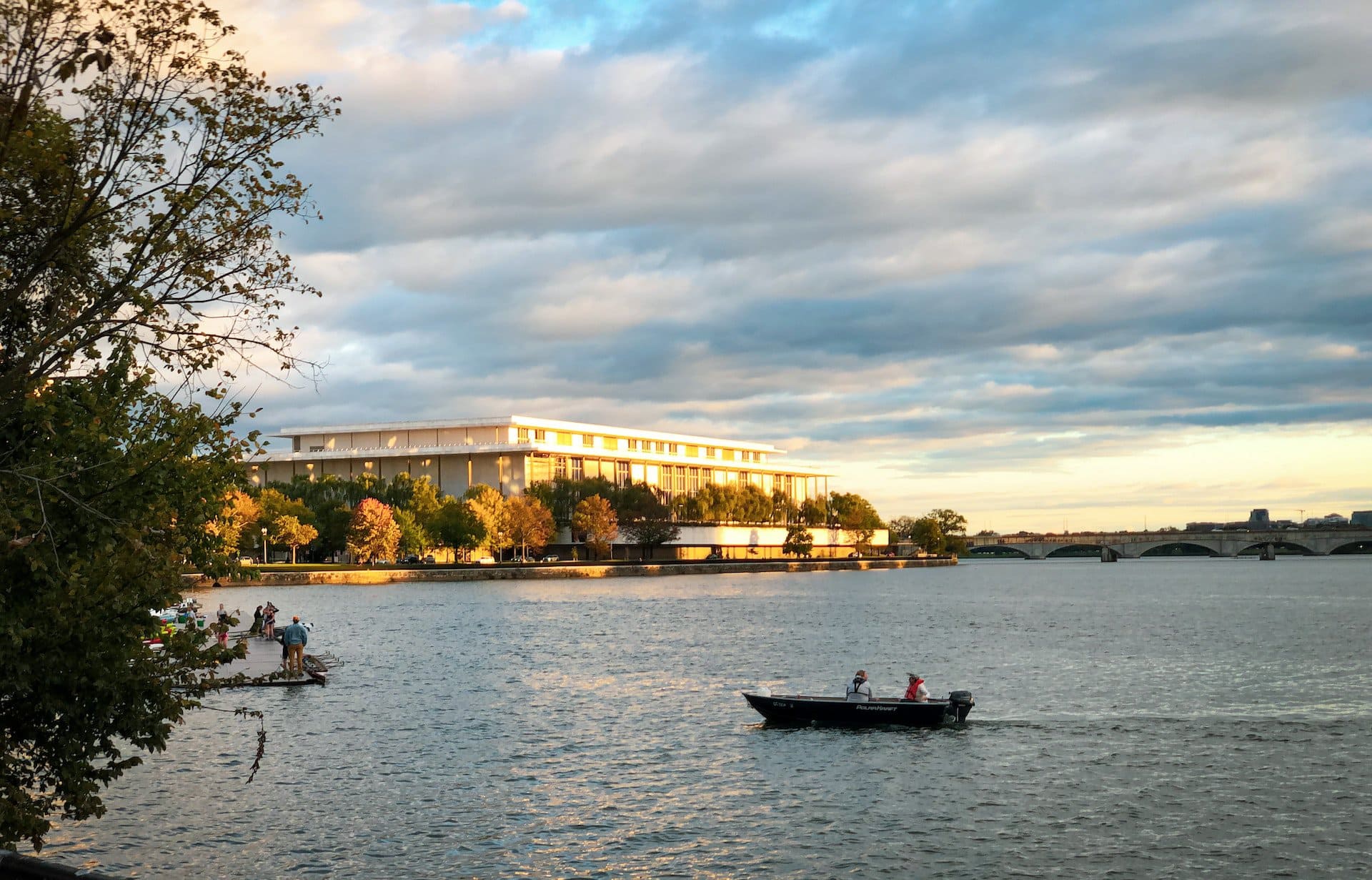
The magnificent performing arts center in honor of President John F. Kennedy is located by the Potomac River in the western part of Foggy Bottom. The modern rectangular building sits on a kind of hill. Around the entire building is a sort of peripheral balcony, offering breathtaking views of the river to the west and south and towards the National Mall to the east.
Within the complex, there are performances, concerts, opera, ballet, and what not? There is also a gallery chronicling the life of the late president. The complex is a pleasant place to stroll around with plenty of dining options, including the famous Roof Terrace Restaurant.
Address: F St NW, 2700, Washington
Dupont Circle District, North Washington D.C.
The Phillips Collection
The Phillips Collection is one of the most prestigious private collections in the U.S. In the museum of art enthusiast Duncan Phillips, you can find an impressive representation of many important European art movements, including some notable masterpieces. Phillips’ collection is based on private acquisitions with extensive knowledge of exactly what to buy. Phillips and his artist wife Marjorie Acker opened their home to the public as a museum of modern art in 1921.
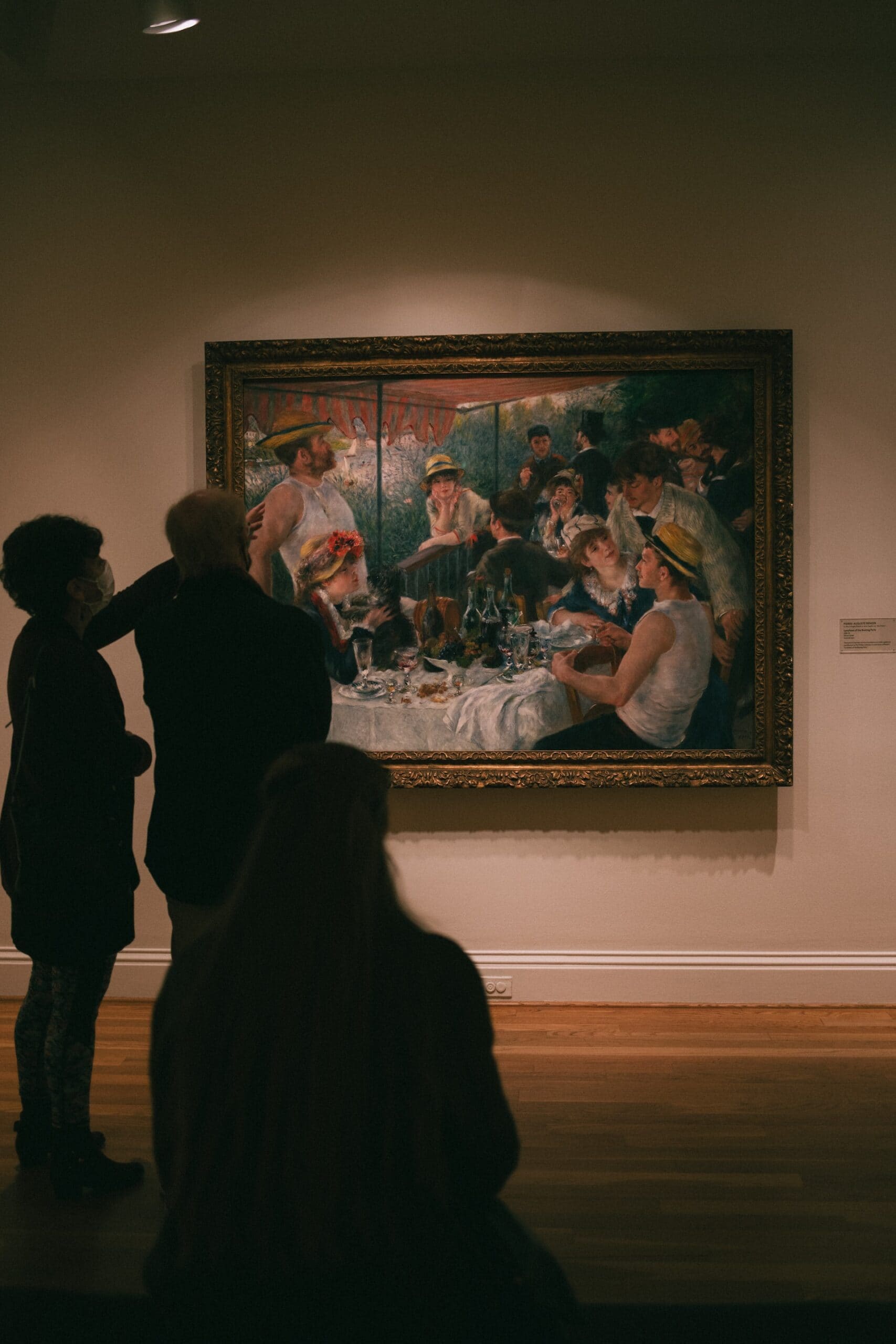
This private museum is considered the first museum in the USA dedicated to modern art. Since what was considered modern back then included works from Impressionism to Picasso, the couple showcased a collection that's now hard to value. The collection consists of about six hundred works acquired according to the taste (and successful commercial insight) of Phillips.
The museum's collection includes a few important works:
- The highlight of the collection is the painting Le Déjeuner des canotiers, arguably the most famous and important painting by the great Impressionist Pierre-Auguste Renoir. This painting is one of the most influential and well-known Impressionist paintings.
- The stunning painting “Saint Peter” by El Greco
- “Mont Sainte-Victoire with Large Pine,” one of the most famous in the series by Paul Cézanne
- “Portrait of Helena Rubinstein” by Amedeo Modigliani
- Three important paintings by Van Gogh – “Auvers, Wheat Field with House,” “The Road Menders,” and “Entrance to a Public Park in Arles”
- Additionally, paintings by Pablo Picasso, Paul Gauguin, Eugène Delacroix, Francisco Goya, and other giants
Woodrow Wilson House
Not far west of the Phillips Museum is the historic home of President Woodrow Wilson. The house is located on S Street, in the area known as “Embassy Row,” named for the dozens of foreign embassies nearby. Wilson's elegant and small house was built in 1915 and was purchased by Wilson just before he left the White House in 1921. Wilson and his wife lived in the house until he passed away about three years later, but his wife Edith continued to reside there until 1961. Today the house has been preserved by the Society for the History and Heritage of US Presidents, and it is open to the public as a museum dedicated to the president.
Address: S St NW, 2340, Washington
Click here for the museum's updated opening hours…
Washington National Cathedral
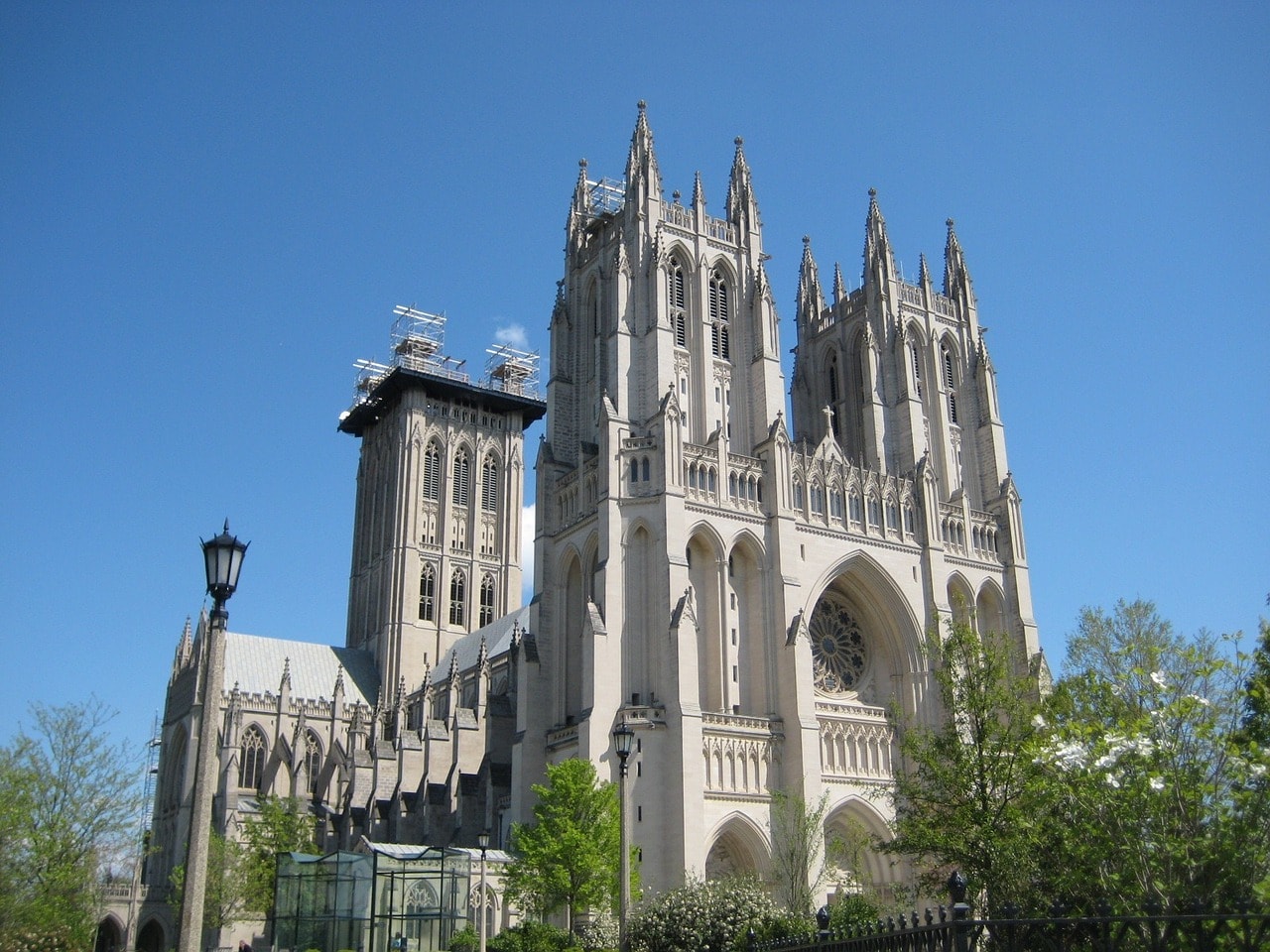
The Washington National Cathedral is located in the northern part of the city, slightly west of the National Zoological Park. The cathedral is dedicated to Saints Peter and Paul and belongs to the Episcopal Church. Originally, the Washington Cathedral was part of the city's original plan by French city planner Pierre Charles L'Enfant, but where it was supposed to be established now stands the National Portrait Gallery in the Penn Quarter. The construction of the cathedral began in 1907 atop Mount Saint Alban Hill.
After completing the Bethlehem Chapel, the cathedral was officially opened for prayers, but the massive structure was only completed in 1990. The cathedral is based on various types of architecture, the most prominent being a local version of Gothic construction. It is an enormous and very impressive structure, though built much later than the truly magnificent European cathedrals.
Address: Wisconsin Ave NW, 3101, Washington
Smithsonian – the National Zoological Park or National Zoo
The National Zoological Park, a particularly charming name for a zoo, is one of Washington's top attractions and a great place for a family outing. Washington's huge zoo is located on the northern outskirts of the city along the banks of Rock Creek. As befits its national and museum status, the zoological park is much more than entertainment and is considered one of the leading institutions in endangered animal conservation.
The zoo houses more than 300 different species of animals, with the rare ones there for conservation. The park was founded in 1889, but today it's filled with modern facilities and is definitely worth visiting with the kids. The park features animal feedings, very impressive displays, and plenty of experiences for the whole family.
Address: Connecticut Ave NW, 3001, Washington
Click here for the latest opening hours of the zoo…
Georgetown
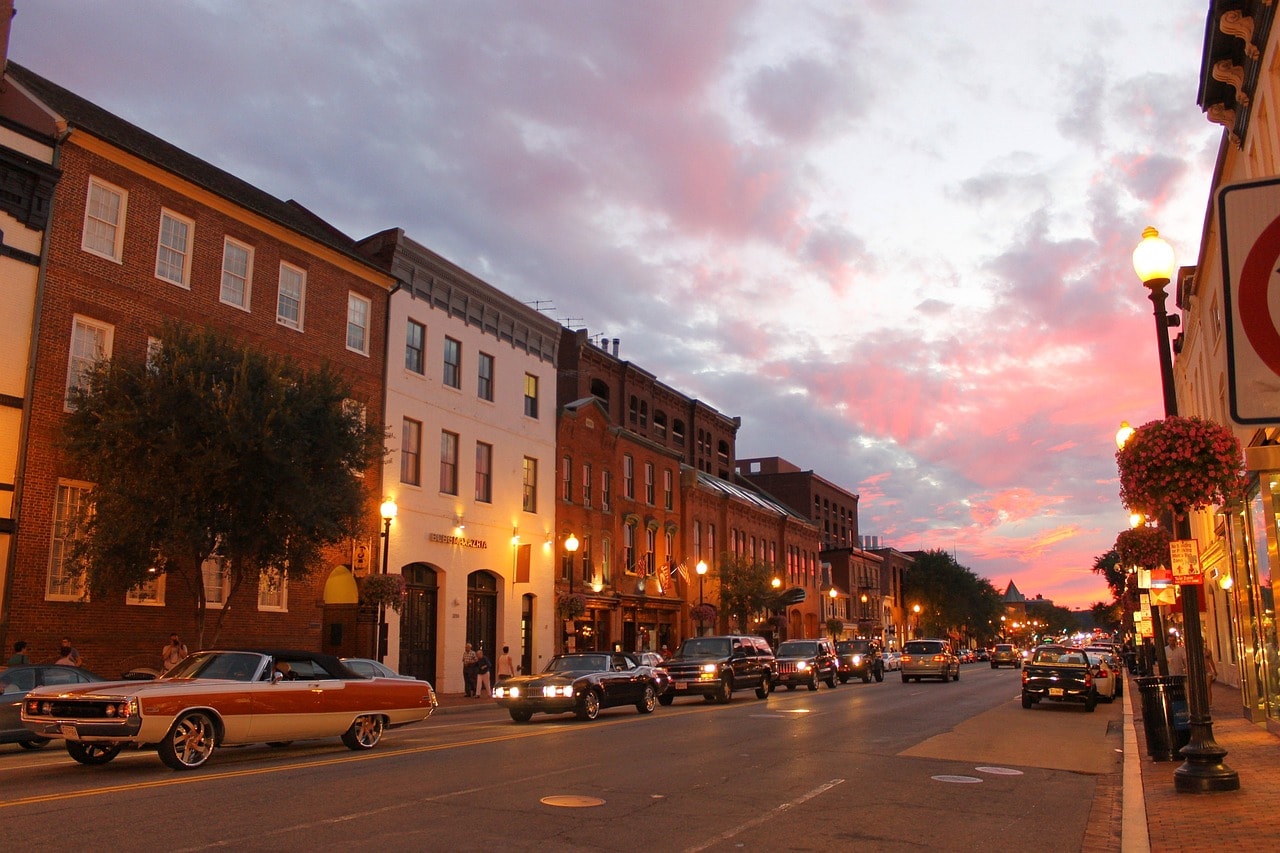
The historic and distinct city of Georgetown is now a charming historic neighborhood within Washington D.C. itself. However, the historic city is more than just the federal capital of the USA, which was constructed in the early 19th century to the west. The Georgetown district lies on the western shore of Rock Creek. Georgetown was established as a British city in 1751 in the southern part of the Maryland colony. It remained an independent city until 1871, when it was essentially annexed to the capital built to its east.
True to its historical charm from the colonial era, the historic center of Georgetown is set along two main streets. Heading south to north, you'll find the lively Wisconsin Avenue, lined with shops and restaurants. The historic Main Street is now part of M Street, running parallel to the Chesapeake and Ohio Canal. The intersection of M Street and Wisconsin Avenue is considered the heart of the neighborhood, where you'll find plenty of charming restaurants, unique shops, and lively entertainment spots. Just a bit east of this intersection, lies the beautiful Old Stone House, a stunning historic home dating back to 1765.
The Chesapeake & Ohio Canal and Georgetown Waterfront Park
The historical canal that linked Washington D.C. to the West was once a crucial part of the city's economy. It was dug at the initiative of President George Washington along the path of the Potomac River to ensure an artificial navigation route rather than relying on the silt-laden river. Today, the canal is a popular national park, both in Georgetown and in many sections throughout Maryland.
In Georgetown, the canal runs between historic houses and you can walk its length. It's a popular spot for leisure and jogging among tourists and neighborhood residents. The charming 19th-century Grace Episcopal Church is located along the way south from the canal toward the Waterfront Park.
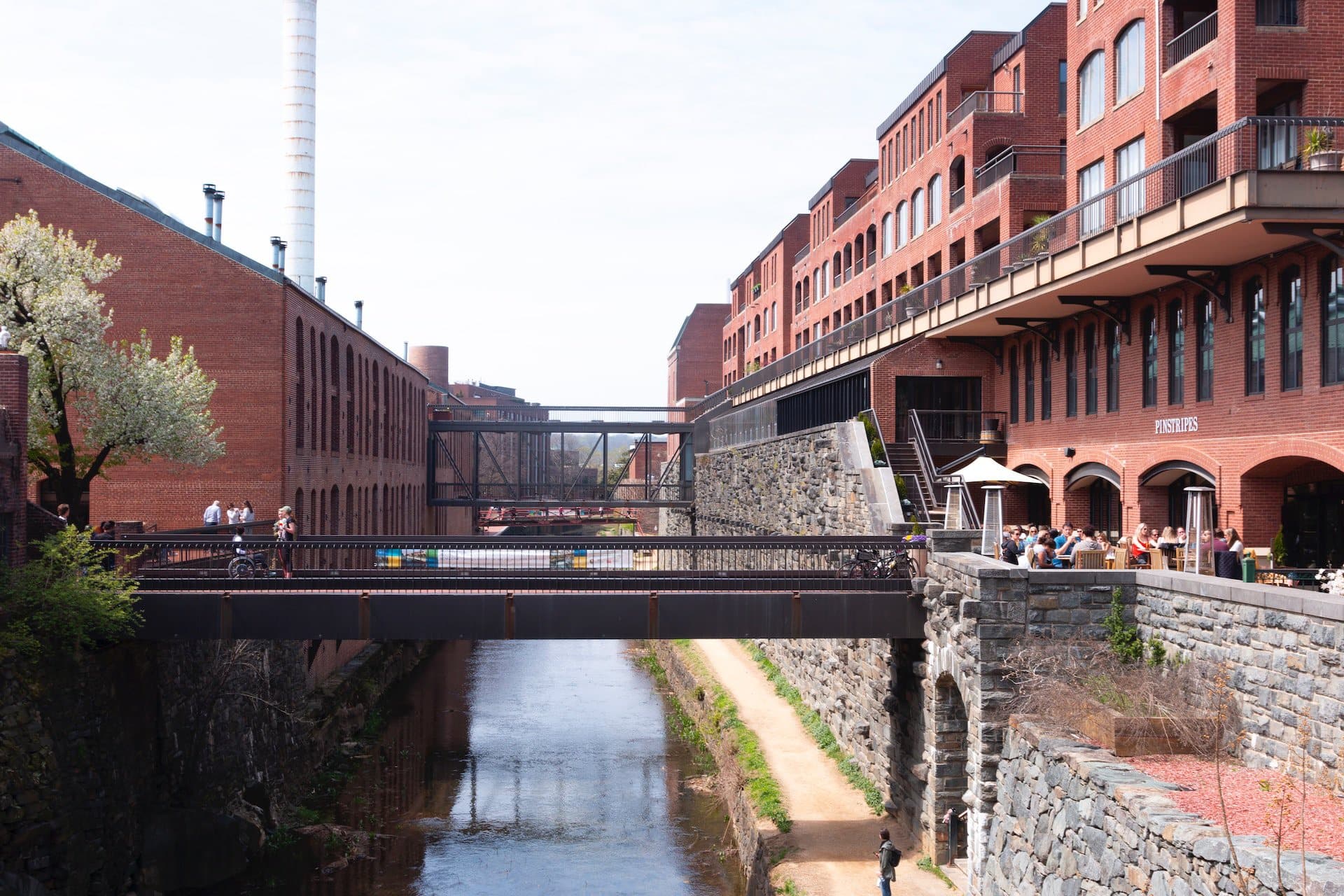
Georgetown's Waterfront Park is also a green and pleasant recreation spot, similar to the canal path. The park is located on the north bank of the Potomac and offers a beautiful green view of the river. It is a favorite sunbathing spot for neighborhood residents and tourists alike.
Georgetown University
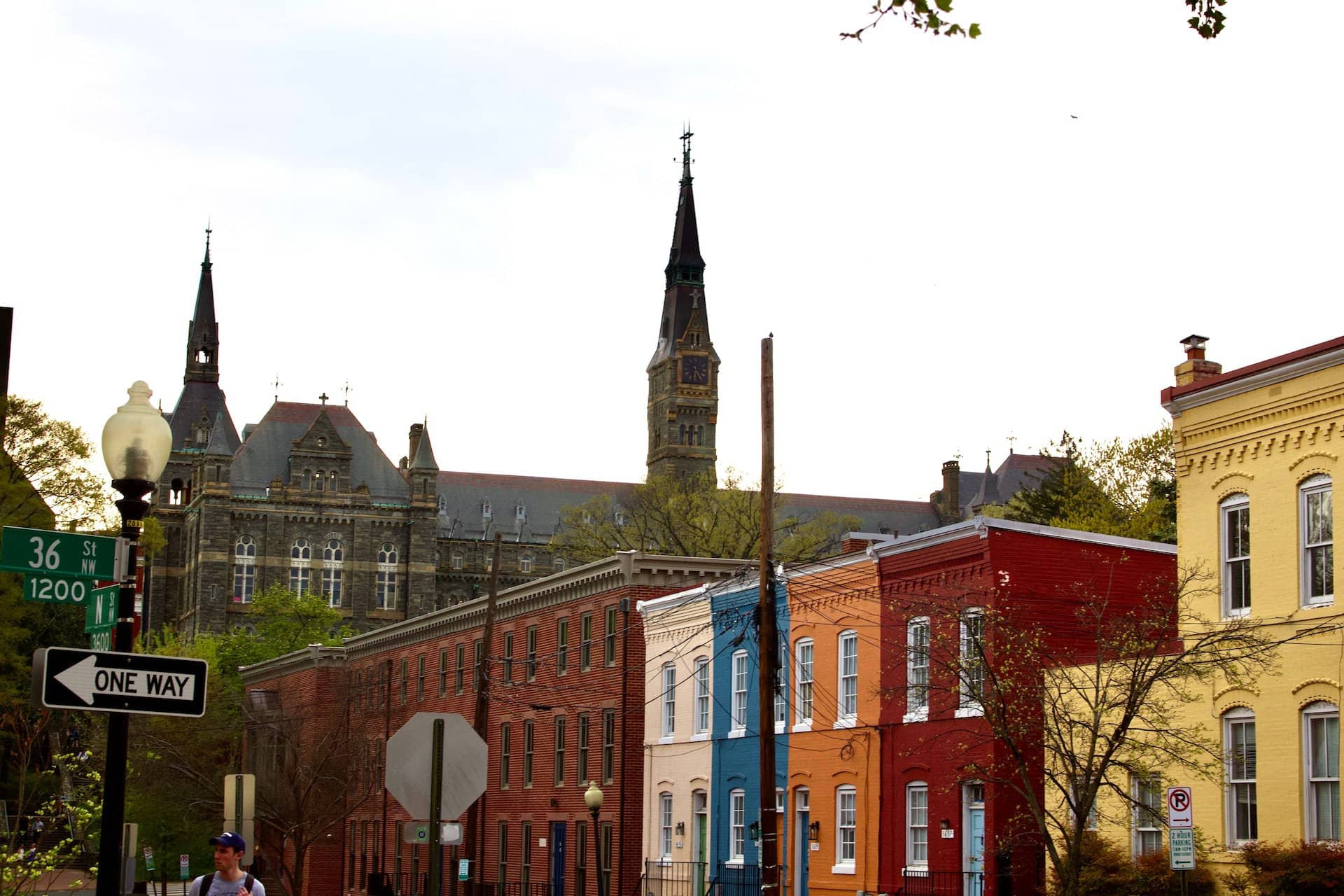
The Georgetown University campus is located west of the neighborhood center, along the Potomac River. It is one of the oldest and most prestigious universities in the USA, founded in 1879 by Jesuit priests, and today is considered the breeding ground of the national administration. About 12,000 students study at the university. The most interesting place on campus is the massive Healy Hall, built in the late 19th century in Northern Renaissance style.
Dumbarton Oaks Museum
The Dumbarton Oaks Museum is housed in the early 19th-century mansion of diplomat Robert Woods Bliss and his wife. Bliss bequeathed the estate to Harvard University upon his death. In 1944, the conference named after him was held here, where the United Nations was practically founded, replacing the unsuccessful League of Nations (not that the UN is so successful). Harvard established a research institute here focusing on Byzantine and Pre-Columbian cultures.
The museum's collection includes several special items, the most famous being the Aztec statue named after the estate, depicting a birthing god. The collection also features El Greco's painting ‘The Revelation,' one of the final works by the Greek artist who was active in Spain. Adjoining the estate are charming gardens that form part of the museum.
Beyond the estate gardens lies the expansive Dumbarton Oaks Park, stretching to Rock Creek on its eastern side. Not far away is Tudor Place, a historic house dating from 1816.
Address: 32nd St NW, 1703, Washington
Click here for the museum's current opening hours…